Ginkgo Tree Symbolism: What the Maidenhair Tree Represents
Start in a quiet temple courtyard where a monk's tree is older than the building around it. Roofs have been rebuilt and walls repainted, yet the ginkgo has kept growing and dropping its gold fans onto the same flagstones each autumn. Most of the tree's meaning comes from that picture, and it is why people ask what a ginkgo stands for before they plant one.
Hope, peace, longevity and resilience are the four meanings you will see repeated, and each has a different source. In this article, we'll go through the tree's old names and temple roots, how each of the four meanings attached itself, and how to site a ginkgo so the meaning has somewhere to live. We keep the deep-time botany out of it and leave that to our ginkgo history guide.
Temple Courtyards and the Ginkgo Maidenhair Tree's Names
The ginkgo is native to south-central and southeast China, and its cultural life began there and spread with Buddhist temples into Korea and Japan. A tree that can stand for many centuries makes a natural courtyard planting. It outlasts the monks who set it, the abbots who followed them, and often the buildings. Visitors read that persistence as something close to sacred.
Why Temples Kept Them
Temple grounds offered what a ginkgo needs to live a very long time: a protected spot, steady care and nobody with a saw. Wild trees die in storms, fires and clearing, but a tree beside a shrine or hall is looked after for generations. That is how the oldest specimens in Asia came to be tied to a single building or a single legend. The association between ginkgo and sanctuary is partly a matter of survival bias, and partly a matter of people choosing to keep what lasted.
The wide, even shade also suits a courtyard. A mature tree casts light to moderate shade, so benches and paths beneath it stay pleasant instead of gloomy. For a place meant for quiet, that counts as much as the symbolism.
What the Names Say
The old Chinese names carry the first meanings. Yinxing is usually translated as "silver apricot," a nod to the pale seed inside its fleshy coat. Gongsun shu means "grandfather-grandson tree," because the person who plants one will not see it at full size, but their grandchild will. In Japan the tree is ichō, and temples there often grew it by the gate or beside the main hall.
"Maidenhair" is a Western name. It comes from the leaf, whose fan shape and fine veins resemble the leaflets of the maidenhair fern. The word "ginkgo" itself traces back to a Japanese reading of the Chinese characters for the tree. So every common name points back to East Asia, and the earliest symbolism is about age, patience and place.
How a Ginkgo Maidenhair Tree Came to Stand for Longevity
Longevity is the oldest and most reliable meaning, and it rests on two plain facts of the tree's biology. One is that individual trees live a very long time. The other is that they take their time getting started. The ginkgo is usually slow-growing, especially in its early years. A young tree puts down roots and builds structure long before it puts on height, so the idea of a tree for the next generation is built into how it grows.
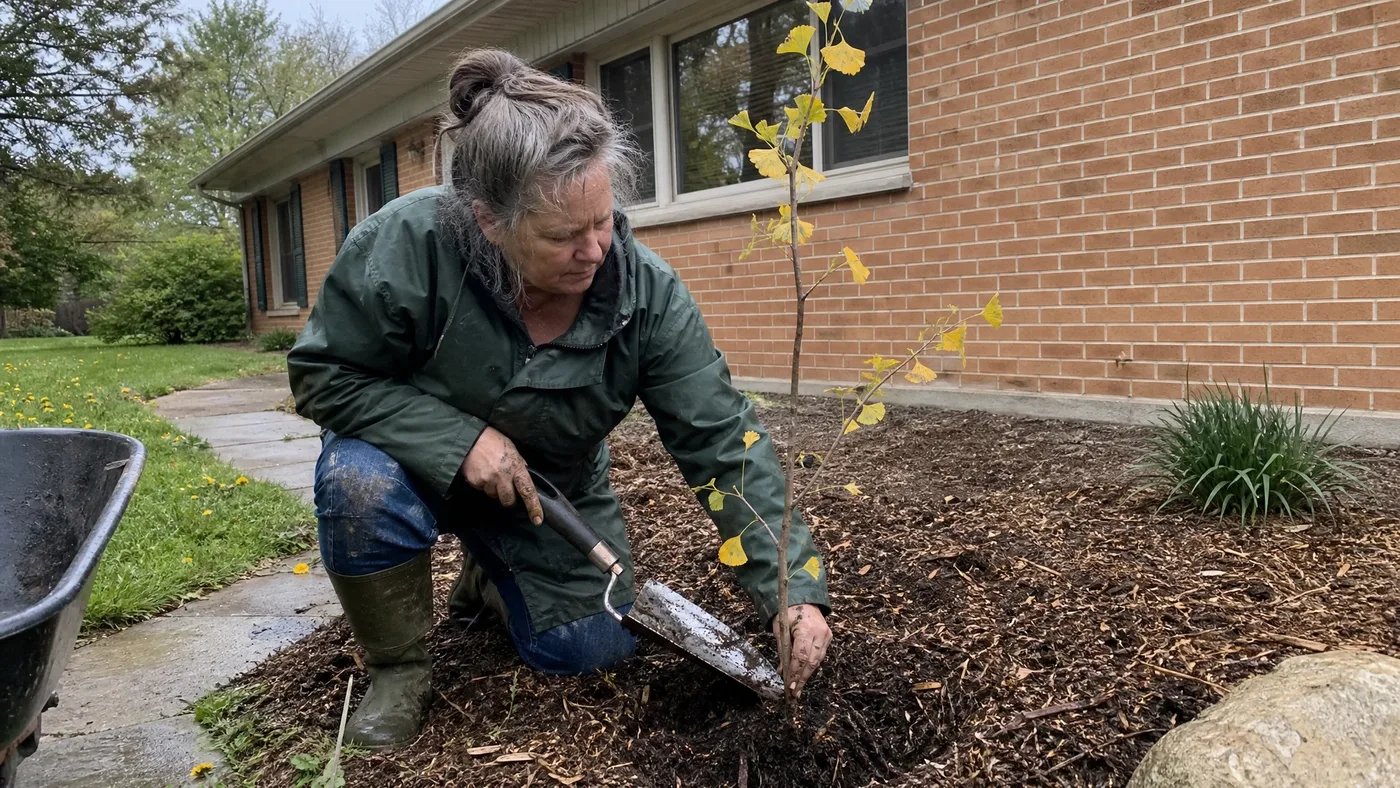
That pattern is what the grandfather-grandson name is describing. In older farming and temple traditions, planting a slow tree was a quiet statement that you expected your family to still be there. One of the most common questions we get is whether the name is literal, and in a sense it is. A sapling planted today is a modest, upright young tree for years, and the broad, dramatic crown that people picture comes much later.
What Longevity Looks Like in Your Yard
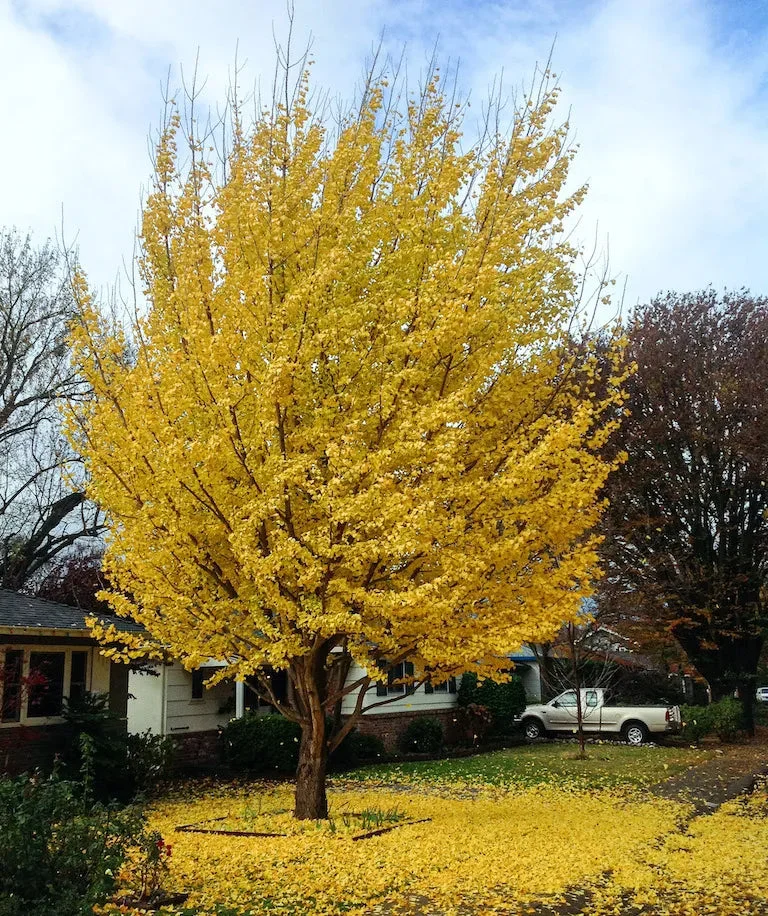
Mature ginkgos reach roughly 50 to 80 feet tall, with the species spread given anywhere from 30 to 60 feet depending on the source. In the first several years, though, expect something far smaller, with a sparse, open habit and branches held at an angle to the trunk. Many people are surprised by how plain a young ginkgo looks in summer. The reward comes in autumn, when the leaves turn a clean gold and drop within a short window.
That slow start is also why the tree suits longevity symbolism better than a fast shade tree. A willow or poplar can race ahead of a ginkgo in ten years, but it will not be standing in a hundred. When you plant a ginkgo to mark a long life, you are accepting the pace that gives the meaning its weight.
Where Hope and Peace Entered the Story
Hope and peace are later layers, and they came from different directions. Neither is as old as longevity, and both depend on stories told about the tree rather than facts about its wood. It helps to keep them apart, because gift cards and memorial notes tend to blur them together.
The Poet's Leaf
The first layer came through European poetry. Goethe wrote a short poem about a ginkgo leaf, asking whether its two lobes are one living thing divided or two things that have chosen to be one. Readers took the leaf as a symbol of friendship, love and unity. This is where the common gift meaning comes from, and it explains why ginkgo leaves turn up in wedding décor and keepsake pressings. The poem is about the shape of the leaf, which is the deeply notched fan that gives the species its botanical name, biloba.
The Survivor Trees
The second layer is more recent and more somber. Ginkgos growing close to the center of the Hiroshima bombing are widely known to have sprouted again afterward, and they became the best-known symbols of hope after the war. Their seeds are a powerful example of nature recovering after a disaster, and second-generation survivor trees are hoped to become lasting symbols of peace. That is why the tree is now linked with peace gardens and remembrance plantings.
The takeaway is that hope and peace attach to the tree through human events, while longevity attaches through biology. Both are legitimate reasons to plant one, and it is worth knowing which story you want your tree to tell.
Resilience Written Into a Ginkgo Maidenhair Tree
Resilience is the meaning that the living tree earns every year. We leave the fossil record aside here, because what matters in a yard is how the tree behaves in modern weather and modern soil. The ginkgo is practically pest-free and resistant to storm damage, and its drought tolerance is rated high. Few shade trees combine all three.
The pest record is the part a naturalist notices first. Leaves are rarely chewed, bark is rarely tunneled, and you will not find the web nests or galls that decorate other shade trees by midsummer. In our rows, we rarely see insects bother a ginkgo at all. The tree's chemistry seems to make it a poor host, which means it supports far fewer caterpillars than a native oak, and that is a fair trade to weigh when you choose it.
Tough Where Other Trees Struggle
The same toughness explains the ginkgo's long career as a street tree. It tolerates most soil, including compacted and alkaline ground, and suits a soil pH range of 6.0 to 8.0. Our ginkgo soil guide goes into the details. Resilient does not mean indestructible, however. Soggy ground still harms roots, and a freshly planted tree needs consistent water for its first seasons.
There is one blunt caveat to the resilience story. Female trees drop seeds whose fleshy coating contains butanoic acid and smells rancid on the ground. Cities plant males for that reason, and it is why we steer memorial plantings toward male selections. Our seed and fruit guide covers what to expect if you inherit a female.
Planting Meaning Where You Will See It
Customers usually ask us whether a ginkgo makes a good memorial, wedding gift or marker tree. It does, provided you plan for the size and site, because a tree that must be removed in twenty years carries the opposite message. Match the meaning you want to the place you will walk past most often. A longevity tree belongs in the middle of a lawn, while a remembrance tree can sit at the end of a path where you pause.
The table below pairs each meaning with the sort of planting that tends to suit it.
| Meaning | Where it comes from | Planting that suits it |
|---|---|---|
| Longevity | Slow growth and temple trees | An open lawn spot with room for a wide crown |
| Hope | Survivor trees at Hiroshima | A window view or a front entry |
| Peace | Remembrance and peace gardens | A quiet corner with a bench |
| Resilience | Pest and storm resistance | A tough site, such as compacted soil or a street edge |
Siting Checklist
Before you dig, work through these points, since a symbolic tree is the one you least want to move later:
- Give it full sun to partial shade. Six or more hours of direct sun is best, and our sun requirements guide explains the trade-offs.
- Leave at least the lower end of the spread range clear of walls, driveways and utilities, remembering that sources disagree and the wider figure is safer.
- Choose a male selection if the tree will stand over a walkway, patio or bench.
- Check your zone with a local extension service, since the ginkgo grows in zones 3a through 9b but regional winters and summers vary.
- Put the plaque or marker beside the tree, not at the trunk, so it never rubs the bark as the trunk thickens.
When you are ready, our guide to planting a ginkgo the right way covers the hole, the depth and the first season's watering. If the tree is a gift, our buying guide helps you choose a size the recipient can handle.
A Tree That Carries Meanings Lightly
A ginkgo can hold all four meanings at once without fuss: long life from its slow growth, unity from its two-lobed leaf, peace and hope from the survivor trees, and toughness from the way it simply gets on with things. You do not need to pick one. The tree does not care what it stands for, and that is part of the appeal. Plant it for the reason that matters to you and let the others come along quietly.
In spring the fans unfold a soft green that deepens through summer, then turn bright yellow in fall, and in winter the bare branches stand against the sky as they have for generations beside the temple wall.
Ginkgo Maidenhair Tree
Nursery-grown Ginkgo Maidenhair Tree in sizes from 1 Gallon Container 1-2' Feet Tall, shipped to your door.
From $80.55
Shop Now →Every Ginkgo we raise gets a spot in full sun with soil that holds moisture yet drains freely, the same setup this tree rewards in your yard. Our own farms let us tend each tree closely, and we grow and sell top-quality trees as a small business. Whatever meaning drew you to the maidenhair tree, come and see the Ginkgos we have ready when you want one to plant.