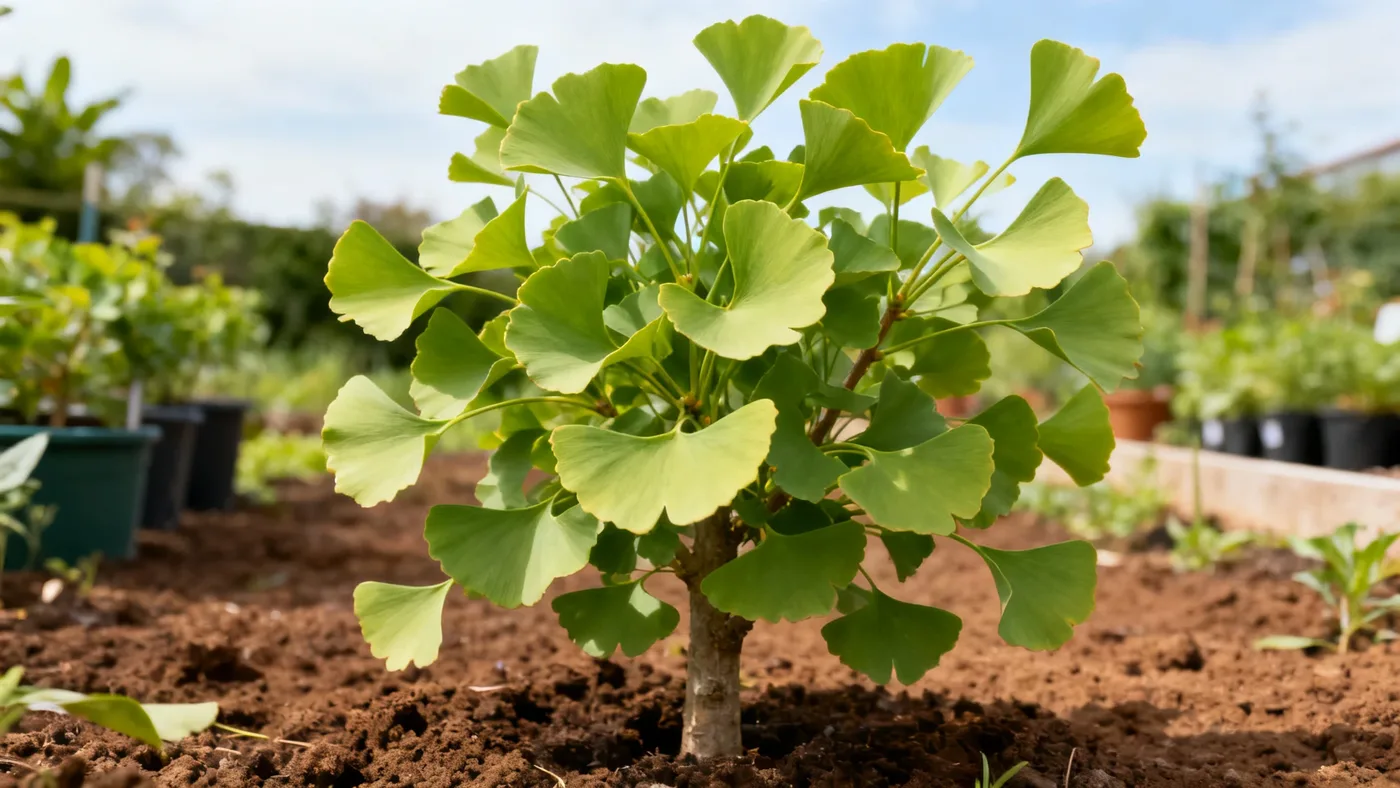
Ginkgo Maidenhair Tree History: The Living Fossil Explained
Ginkgo biloba, the Maidenhair Tree, stands as one of Earth's most remarkable botanical survivors. Unlike most trees around us, the ginkgo is living history. This deciduous tree has changed remarkably little in 200 million years, earning its famous designation as a "living fossil." If you're planting a ginkgo in your garden today, you're cultivating a direct descendant of trees that witnessed the rise and fall of dinosaurs.
Understanding the ginkgo tree history and ginkgo biloba origin helps us appreciate why this tree deserves a place in modern landscapes. Its resilience, longevity, and biological uniqueness make it far more than just another shade tree.
What Makes Ginkgo a "Living Fossil"?
The term "living fossil" applies to organisms that have survived virtually unchanged for millions of years. The ginkgo fits this definition perfectly. Fossil records show that ginkgo trees thrived during the Jurassic and Cretaceous periods, when dinosaurs roamed the earth. Species within the Ginkgoaceae family once spread across the Northern Hemisphere. Today, a single species remains: Ginkgo biloba.
What explains this remarkable continuity? Ginkgos possess biological features that proved advantageous across epochs. Their distinctive fan-shaped leaves, simple reproductive structure, and ability to tolerate diverse soil conditions allowed them to persist when countless other species vanished. Their resistance to pests and diseases gave them advantages that modern trees often lack.
The ginkgo is the only surviving member of a once-diverse plant family. This isolation itself makes it scientifically invaluable. Every ginkgo tree alive represents millions of years of evolutionary continuity, a living connection to prehistoric Earth.
Ancient Origins: The Ginkgo's Deep History
Geological evidence places ginkgo ancestors in the fossil record over 270 million years ago. These early relatives grew across what is now North America, Europe, and Asia. By the Jurassic period, 200 million years ago, ginkgo species were widespread and diverse.
Over millions of years, climate shifts and changing habitats eliminated ginkgo populations across most of the globe. Ice ages that swept through North America and Europe wiped out populations there. The ginkgo biloba origin story narrowed dramatically. By the time humans appeared, wild ginkgos survived only in isolated mountain regions of central China.
Chinese monks and scholars recognized the ginkgo's value. They cultivated it around temples and in gardens starting around 1,000 years ago. This deliberate cultivation by humans may have saved the species. Without that early protection and propagation, the ginkgo might have disappeared entirely. The tree we know today owes its survival partly to human intervention, a partnership between nature and culture that spans centuries.
Ginkgo Maidenhair Tree Native Range and Geographic Origins
The ginkgo maidenhair tree native range centers on China, specifically mountainous regions in what is now Zhejiang province. Small relict populations, small surviving populations of an otherwise extinct species, are proposed to exist in these remote areas. However, botanists debate whether truly wild ginkgos persist even in their native Chinese range. Centuries of human cultivation have blurred the line between wild and domesticated populations.
Despite this uncertainty, China remains the undisputed historical homeland of Ginkgo biloba. The tree's presence in Chinese art, literature, and religious sites stretches back over 1,000 years. Temples throughout China feature ancient ginkgo specimens, some claimed to be over 1,000 years old. These trees serve as living monuments to the species' cultural and biological significance.
From China, ginkgos were introduced to Japan, Korea, and other parts of Asia centuries ago. European botanists encountered the tree in the 18th century and brought seeds back to Europe. The tree arrived in North America during the early 19th century. Today, the ginkgo thrives globally, from USDA zones 3 to 8, having reclaimed territory in North America where its ancestors once grew millions of years ago.
Why Ginkgo Survived When Other Species Failed
The ginkgo's survival strategy relies on biological and ecological flexibility. Several factors explain why this tree persisted where others vanished.
Tolerance to extremes. Ginkgos thrive in diverse soil conditions, from sandy to clay to compacted urban soils. They tolerate drought once established, a crucial trait during climate shifts. They withstand urban pollution and salt exposure with minimal damage. This adaptability meant ginkgos could survive in marginal habitats that eliminated more finicky species.
Simple, durable biology. Ginkgos have no major pests or diseases. Their reproductive strategy, while unique, proved effective. As a wind-pollinated species, ginkgos didn't depend on specific pollinator relationships that might vanish with changing ecosystems.
Extreme longevity. The oldest tree species ginkgo designation reflects their lifespan. Most ginkgos live several hundred years; documented specimens in China exceed 1,000 years. This longevity gave the species time to adapt and disperse during climate transitions that killed off shorter-lived competitors.
Cultural protection. Unlike wild trees at the mercy of natural selection alone, cultivated ginkgos in China benefited from deliberate human propagation. Monks and gardeners ensured the tree's survival through periods when wild populations dwindled.
The Ginkgo's Journey: From Ancient Forest to Modern Garden
The ginkgo's path from obscure Chinese mountain species to globally recognized landscape tree spans centuries and continents. For over 1,000 years, ginkgos remained confined largely to Asia. Chinese and Japanese gardeners refined cultivation techniques and selected superior forms, but the tree remained unknown to Western horticulture.
European exploration and trade changed everything. In the 18th century, botanists collecting specimens from China and Japan brought ginkgo seeds and saplings to Europe. The tree impressed with its hardiness and disease resistance. European nurseries began propagating it. By the 19th century, ginkgos appeared in parks and gardens across Europe and North America.
Urban planners discovered the ginkgo's exceptional tolerance for city conditions. Unlike many shade trees, ginkgos thrived despite air pollution, compacted soil, and sidewalk stress. Street trees died by the thousands; ginkgos endured. This toughness, rooted in millions of years of survival, made them ideal for urban landscapes. Today, ginkgos line streets and parks worldwide.
The tree also gained horticultural interest. Nurseries developed cultivars suited to specific purposes. 'Autumn Gold' remains one of the most widely planted, valued for its broad spreading form and reliable golden fall color. 'Princeton Sentry' offers a narrower columnar shape for constrained spaces. These modern selections represent thousands of years of ginkgo cultivation history, refined by modern breeding.
The Science Behind Ginkgo's 300+ Year Lifespan
Why can ginkgos live for centuries while most trees live decades? Scientists studying ginkgo biloba origin and biology point to several factors.
The ginkgo's cells repair damage efficiently. Unlike trees with faster growth rates, which sacrifice cellular precision for speed, ginkgos grow slowly and methodically. This slow growth, roughly 12 inches per year in typical conditions, appears linked to cellular durability. Slow, careful development produces sturdy wood and reliable growth patterns.
Ginkgos resist stress exceptionally well. Pests leave them alone. Diseases rarely affect them. Extreme weather, drought, and urban pollution cause minimal harm. This stress resistance means less biological strain, potentially extending lifespan. A tree that avoids disease and pest damage simply lasts longer.
The ginkgo's reproductive flexibility also matters. Trees heavily invested in reproduction often decline faster. Ginkgos are dioecious, meaning individual trees are either male or female. This separation may reduce metabolic demands on some individuals, allowing greater energy allocation to longevity rather than seed production.
Age rings in ancient ginkgos show steady, consistent growth over centuries. No boom-and-bust cycles appear. Just steady, reliable expansion year after year, decade after decade. This steadiness contrasts with trees that grow fast then decline. The ginkgo's approach prioritizes endurance over speed, a strategy that pays dividends over geological timescales.
Growing an Ancient Tree in Your Landscape
Planting a ginkgo connects you to prehistoric Earth and thousands of years of human cultivation. These trees thrive in full sun and reach 25 to 50 feet at maturity in typical landscape settings. In ideal conditions, young ginkgos grow up to 24 inches per year, though growth slows with age.
The ginkgo's adaptability makes it forgiving. It tolerates clay soils, sandy soils, compacted soils, and urban conditions that stress other trees. Deep, loamy, well-drained soil is ideal but not essential. Once established, ginkgos need average water and tolerate periods of drought. They require minimal pruning beyond removing dead or crossing branches while young.
Ginkgos are exceptionally long-lived investments. A tree planted today might stand for 300, 400, or even 500 years. It will outlive you, your children, and their children. This permanence carries weight. You're not just adding a tree; you're establishing a living legacy.
Male cultivars are strongly preferred for residential planting. Female ginkgos produce fleshy fruit with an intensely unpleasant odor as they decompose. Male trees produce no fruit and cause no problems. Named cultivars like 'Autumn Gold,' 'Princeton Sentry,' and 'Fastigiata' are all male and reliably seedless.
For detailed information on site selection, soil preparation, planting timing, and ongoing care, consult our complete ginkgo care guide.
Quick Reference: Ginkgo History and Characteristics
| Characteristic | Detail |
|---|---|
| Botanical Name | Ginkgo biloba |
| Family | Ginkgoaceae (sole surviving member) |
| Native Range | Central China (Zhejiang province and surrounding regions) |
| Fossil Record | Ancestors present 270+ million years ago; modern form 200 million years old |
| Lifespan | Several hundred years typical; documented specimens over 1,000 years old |
| Mature Height | 25-50 feet in landscape settings; specimens reach 80-100+ feet with age |
| Mature Width | 25-35 feet (narrower for columnar cultivars) |
| Growth Rate | Slow to moderate: ~12 in/year average; up to 24 in/year when young in ideal conditions |
| USDA Zones | 3-8 (some references extend to 9) |
| Notable Male Cultivars | 'Autumn Gold' (broad, spreading); 'Princeton Sentry' (narrow, columnar); 'Fastigiata' (columnar) |
| Disease Resistance | Essentially disease-free; no significant pest or disease issues |
| Urban Tolerance | Excellent; tolerates pollution, salt, compacted soil, and drought |