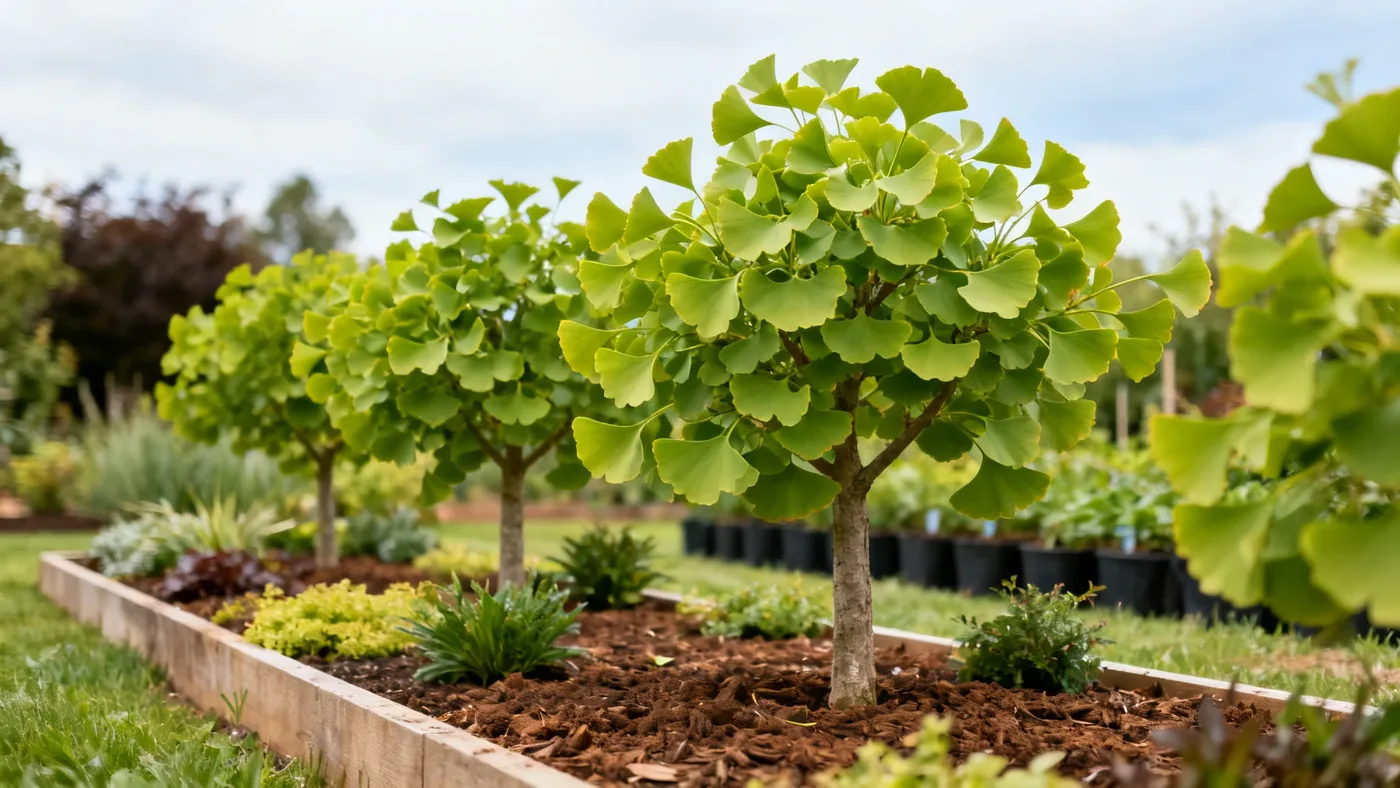
12 Landscape Design Ideas for Your Ginkgo Maidenhair Tree
The Ginkgo Maidenhair Tree stands out in the landscape. With its distinctive fan-shaped leaves, brilliant golden fall color, and exceptional toughness, it offers far more design possibilities than simply planting it in isolation. Whether you're looking to maximize your yard's visual impact or solve a specific growing challenge, a ginkgo can anchor your landscape plan. This guide explores 12 practical ginkgo tree landscaping ideas that turn this remarkable tree into your garden's centerpiece.
1. Create a Multi-Season Shade Canopy
A mature ginkgo reaches 25 to 50 feet tall and 25 to 35 feet wide in typical landscape settings, making it an ideal shade provider for large mixed borders. Once established, its canopy creates deep, dappled shade where you can grow shade-tolerant groundcovers and perennials underneath. Plant a ginkgo at the edge of a planting bed to allow afternoon shade while keeping morning sun for sensitive plants.
The real advantage here is the seasonal variation. During summer, the medium green foliage filters harsh rays. When leaves drop in fall (often within just a few days in late October or November), winter sun reaches plantings below. This dynamic shade layer creates an ever-changing environment that supports diverse understory plants. Choose male cultivars like 'Autumn Gold' to avoid the unpleasant odor that female trees produce from fallen seed coats.
Practical takeaway: Space your ginkgo 25 to 30 feet from other major structures so its mature crown develops without crowding. Position it on the north or west side of delicate plantings to intercept afternoon heat.
2. Feature as a Bold Specimen Tree
When you want a landscape focal point that captures attention year-round, nothing matches a well-placed ginkgo. Its architectural branch structure and furrowed bark create winter interest after leaves drop. In spring, the canopy fills with fan-shaped leaves. Come fall, the transformation is dramatic: a uniform, brilliant golden yellow that holds color for weeks before dropping rapidly. This makes the ginkgo perfect for a lawn or corner where you want a showstopper.
Select a location with full sun exposure and at least 30 feet of clearance on all sides to allow the natural spreading form to develop. Cultivars like 'Autumn Gold' offer a broad, spreading silhouette that works well as a stand-alone specimen. Avoid planting directly over underground utilities, as the root system will expand substantially over decades (ginkgos commonly live several hundred years in home landscapes).
Practical takeaway: Plant a young ginkgo in spring or fall, staking if necessary to support a straight central leader during the slow-to-moderate growth phase (roughly 12 inches per year initially). Establish a clear circle of mulch 3 feet in diameter to reduce competition while roots establish.
3. Design a Formal Allee or Avenue
Ginkgo trees have been planted in formal avenues for centuries, and their narrow, columnar cultivars make this design work beautifully in home landscapes. 'Princeton Sentry' and 'Fastigiata' grow 25 to 50 feet tall but remain just 8 to 15 feet wide, perfect for lining a driveway or pathway. A double row of columnar ginkgos creates a stunning formal corridor that frames your home's entry or guides visitors through your property.
This approach works especially well in zones 3 through 8 (some references extend to zone 9), making ginkgo practical across most of North America. The uniform golden fall display creates a synchronized natural gateway, and the narrow profile means you won't overcrowd your site. Space columnar cultivars 8 to 15 feet apart along the avenue, depending on how quickly you want the canopy to connect.
Practical takeaway: Plan your allee route to follow existing hardscaping or sight lines on your property. Ensure each tree location has full sun access and average moisture during establishment. Male cultivars only: female trees' fruiting would undermine your formal design.
4. Use Columnar Forms for Vertical Screening
When you need to block an unsightly view without consuming horizontal space, a columnar ginkgo delivers. 'Princeton Sentry' and similar narrow cultivars fit into tight spots where a spreading form would overwhelm the landscape. Plant them along a property line to create a living screen, or position them to mask a neighboring structure or utility area. At 25 to 50 feet tall but only 8 to 15 feet wide, they achieve privacy without dominating the yard.
The slow-to-moderate growth rate (12 to 24 inches per year) means your screen takes time to mature, but once established, a ginkgo screens for centuries with minimal maintenance. Unlike deciduous screening options that lose leaves, ginkgo holds foliage through the full growing season. When leaves do drop in late fall, you gain winter views again.
Practical takeaway: Plant columnar cultivars in full sun at least 8 feet from structures to allow air circulation around the trunk. Prune in late winter dormancy only to remove dead or competing branches; these cultivars rarely need heavy pruning if given adequate space.
5. Underplant with Shade-Tolerant Companions
The best trees to pair with ginkgo include shade-tolerant groundcovers, perennials, and low shrubs. Once a ginkgo's canopy matures (typically 20 or more years), it creates conditions perfect for hostas, ferns, coral bells, hellebores, and liriope. These shade-lovers establish themselves gradually as the tree's crown expands. Plan your underplanting strategy early, even though it will take years to fully realize.
Avoid planting aggressive spreading groundcovers too close to your ginkgo's trunk, as you'll want to manage the root zone during establishment. Wait until the tree has been in the ground for 3 to 5 years before introducing dense plantings nearby. The beauty of this approach is the layered effect: canopy shade, mid-level tree structure, and a carpet of carefully selected perennials create landscape depth.
Practical takeaway: Choose companion plants that tolerate medium moisture and dappled shade. Allow 3 feet of mulch around the ginkgo trunk for the first several years, expanding the planting zone gradually as roots establish and you're confident in the tree's vigor.
6. Solve Urban and Polluted Site Challenges
Ginkgos are legendary for surviving urban conditions. They tolerate pollution, road salt, compacted soil, and the heat reflected off pavement better than nearly any other shade tree. If you're dealing with a tough site where other trees have failed (parking lot edges, streetside plantings, areas downwind from traffic), a ginkgo can succeed. Their high salt tolerance and adaptability to sandy, clay, and even heavily compacted urban soils makes them a practical choice for challenging locations.
The tree's resilience extends to establishment: once a ginkgo survives the slow initial growth period and develops an established root system, it tolerates drought and withstands environmental stress that would damage more finicky species. In zones 3 through 8, you can confidently plant ginkgos in urban situations knowing they'll outlast the buildings around them.
Practical takeaway: In polluted or compacted sites, improve the planting hole with 2 to 3 inches of compost or aged bark mixed into the native soil. Water regularly for the first two growing seasons. Once established, your ginkgo needs only average moisture; drought tolerance kicks in after year three.
7. Maximize Fall Color Drama
Few trees match the ginkgo's fall display. In late October or November (zone-dependent), the entire canopy turns a brilliant, uniform golden yellow almost simultaneously. The transformation happens fast: leaves often drop within just a few days, creating a brief but spectacular show. If fall color is your primary design goal, position your ginkgo where you'll see it from your home's main windows or from the street.
Plan your surrounding plantings to complement this color burst. Nearby evergreens create a dark backdrop that makes the yellow glow. Late-season perennials or ornamental grasses with burgundy or bronze tones provide contrast. The short drop window means you won't have messy leaf cleanup stretched across months: ginkgos shed their foliage quickly and completely, leaving a clean landscape underneath.
Practical takeaway: Plant a ginkgo where morning light hits its canopy during the fall display, maximizing the luminous quality of the golden foliage. Ensure the tree isn't shaded by taller structures during this critical window.
8. Create a Multi-Tree Grove for Landscape Impact
A single ginkgo makes a statement, but a grove of three or five trees creates a forest feel even on a modest property. Space standard forms 25 to 30 feet apart in an informal grouping to allow each tree's crown to develop distinctly while creating a unified visual mass. This design approach works especially well on larger properties or in settings where you want to establish a sense of maturity quickly.
The staggered fall color display across multiple ginkgos extends the golden season. As trees mature at slightly different rates, the full effect unfolds gradually. Winter architecture becomes dramatic: multiple trunks with furrowed bark and intricate branch patterns create a complex silhouette against the sky. This design also provides practical benefits: if one tree is damaged or fails, the grove remains balanced.
Practical takeaway: Arrange multiple ginkgos in an asymmetrical grouping (three trees in a triangle, five in a scattered pattern) rather than perfect rows. Vary cultivars slightly: combine a broad-spreading form with one or two narrower types for visual interest.
9. Use Dwarf Cultivars for Smaller Spaces
If you love ginkgos but lack space for a 40-foot specimen, 'Jade Butterflies' offers a dwarf, shrubby alternative. This cultivar remains much smaller than standard forms, making it suitable for containers, bonsai cultivation, or tight garden spots. While not ideal for permanent container life long-term, dwarf ginkgos can be grown in large containers for several years, giving you flexibility in your landscape design.
Container-grown dwarf ginkgos let you shift the plant seasonally to optimize its visual presence. Move it front-and-center during peak fall color, then tuck it aside during summer. They work well in Japanese-inspired gardens or zen landscapes where their sculptural form and slow growth rate fit the design philosophy perfectly.
Practical takeaway: Dwarf ginkgos still prefer full sun and well-drained soil. If containerizing, use a pot at least 15 gallons to support healthy growth. In zones 3 through 8, protect container trees in winter by moving them against a sheltered house wall or burying the pot in soil for insulation.
10. Design for Winter Architectural Interest
After ginkgo leaves drop (often within just days), the tree's structural skeleton becomes a landscape feature. The furrowed bark, ascending branch angles, and intricate twig patterns create visual interest in the dormant season. Position a ginkgo where winter light illuminates its form: against an evergreen backdrop, at a landscape's focal point, or where morning sun rakes across its trunk.
This design works brilliantly when paired with winter perennials or ornamental grasses that add texture at ground level. The bare ginkgo silhouette creates the vertical anchor, while low plantings fill the visual space beneath. In zones 3 through 8, this winter presence extends from November through March or April, a substantial portion of the year.
Practical takeaway: Prune in late winter dormancy to enhance the tree's natural architectural form. Remove any crossing or competing branches that obscure the clear structure. Avoid heavy shaping: let the ginkgo's natural form guide your pruning.
11. Establish a Drought-Tolerant Landscape Framework
Once established (after the slow initial growth period), ginkgos exhibit high drought tolerance. If you're designing a water-conscious landscape, a ginkgo provides a mature shade canopy without demanding constant irrigation. This makes it valuable in areas where summer water restrictions are common or where you want to minimize landscape water use. Pair the ginkgo with other drought-tolerant plantings underneath: native sedges, drought-tolerant perennials, and mulched open space.
Establish the tree properly during years one and two with regular watering, then you can transition to minimal supplemental irrigation. The well-developed root system reaches deeper soil layers where moisture persists longer. This approach saves water over the tree's several-hundred-year lifespan while maintaining a healthy, productive landscape.
Practical takeaway: Water young ginkgos regularly their first two growing seasons to establish a deep root system. Once roots are established, taper back irrigation. Mulch the root zone with 3 to 4 inches of bark or compost to retain soil moisture.
12. Combine Ginkgo with Other Large Shade Trees
The ginkgo tree landscape design gains complexity when you mix it with other large shade trees in a balanced composition. Pair ginkgos with complementary species that offer different characteristics: perhaps an oak for darker foliage contrast, a maple for finer texture, or an elm for horizontal branch patterns. This mixed-tree approach creates layered visual interest and a more naturalistic landscape feel.
Space trees 25 to 30 feet apart minimum (for standard forms) to allow each crown to develop fully without crowding. Stagger plantings so the eye moves through the landscape rather than seeing a solid wall of canopy. The combination of ginkgo's unique form, fall color, and presence with other shade trees creates a mature, established appearance much faster than any single species alone.
Practical takeaway: Plan mixed-tree compositions on paper before planting. Consider mature heights, spread, and seasonal appearances. Place ginkgos where their rapid fall color change will be noticed alongside the more gradual color shifts of companion trees.
Quick Reference: Ginkgo Landscape Planning Guide
| Design Goal | Recommended Cultivar | Spacing | Sun Requirement | Mature Size | Best Zones |
|---|---|---|---|---|---|
| Specimen focal point | 'Autumn Gold' | 30 ft from structures | Full sun | 25–50 ft tall × 25–35 ft wide | 3–8 |
| Formal allee/avenue | 'Princeton Sentry' or 'Fastigiata' | 8–15 ft apart | Full sun | 25–50 ft tall × 8–15 ft wide | 3–8 |
| Vertical screen | 'Princeton Sentry' | 8–15 ft from property line | Full sun | 25–50 ft tall × 8–15 ft wide | 3–8 |
| Shade canopy with underplanting | 'Autumn Gold' | 25–30 ft minimum | Full sun | 25–50 ft tall × 25–35 ft wide | 3–8 |
| Small space or container | 'Jade Butterflies' | N/A (dwarf form) | Full sun | Dwarf, shrubby | 3–8 |
| Urban/polluted sites | 'Autumn Gold' | 25–30 ft | Full sun | 25–50 ft tall × 25–35 ft wide | 3–8 |
| Grove or multi-tree planting | Mixed (vary cultivars) | 25–30 ft between trees | Full sun | 25–50 ft tall × 8–35 ft wide | 3–8 |
Planting and Care Essentials for Success
Regardless of which landscape design you choose, start with proper establishment. Plant in spring or fall in full sun locations with average moisture. Ginkgos adapt to most soil types, though they prefer deep, loamy, well-drained soil. They tolerate sandy, clay, and even compacted urban soils, making them forgiving of imperfect conditions. Young trees grow slowly to moderately (roughly 12 inches per year, up to 24 inches in ideal conditions), so patience during establishment pays off with a tree that will outlive you by centuries.
Pruning is minimal: remove dead, crossing, or competing branches in late winter dormancy, and establish a central leader while young. Fertilizing is generally unnecessary in decent soil, though a balanced, slow-release option in early spring helps young or stressed trees. The main challenge isn't care, but avoiding female trees whose foul-smelling seed coats create significant mess. Always choose male cultivars like 'Autumn Gold', 'Princeton Sentry', 'Fastigiata', or 'Saratoga'.
For detailed growing guidance, consult your local ginkgo maidenhair tree care guide to ensure your tree thrives through establishment and matures into the landscape cornerstone you envision.