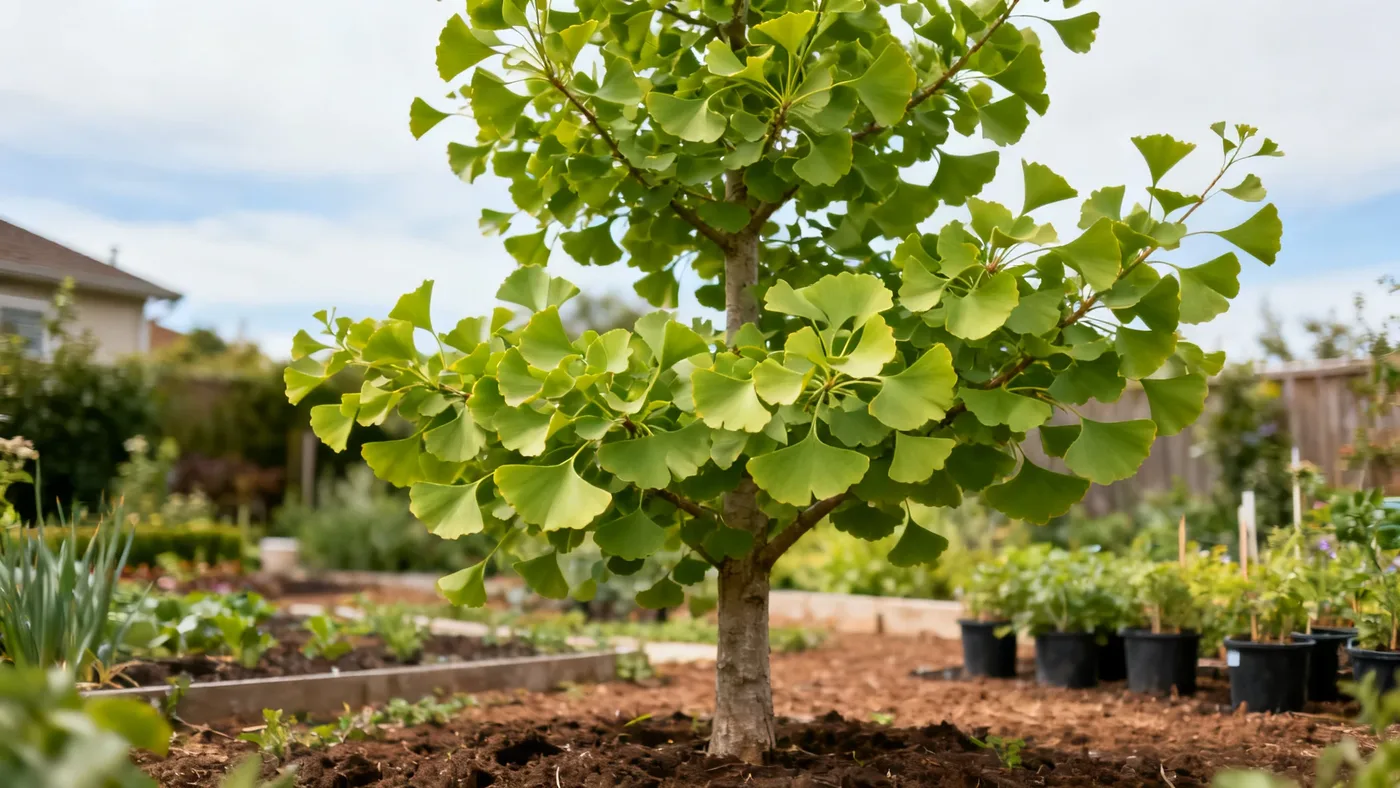
Ginkgo Maidenhair Tree Care Guide: Everything You Need to Know
The Ginkgo Maidenhair Tree (Ginkgo biloba) stands as one of the most remarkable trees you can grow. Its distinctive fan-shaped leaves transform into brilliant golden yellow come autumn, and its adaptability to urban conditions makes it a natural choice for homeowners who want a reliable shade tree with personality. This guide covers everything from planting to long-term care, backed by decades of practical nursery experience.
Table of Contents
- Getting Started: Site Selection and Planting
- Watering and Soil Requirements
- Sunlight and Growing Conditions
- Pruning and Maintenance
- Pest and Disease Management
- Troubleshooting Common Problems
- Quick Reference Guide
Key Takeaways
- Plant Ginkgo trees in USDA zones 3-8 where they'll thrive for centuries with minimal intervention
- Choose male cultivars like 'Autumn Gold' to avoid the foul-smelling fruit drop from female trees
- Ginkgos grow roughly 12 inches per year when young, reaching 25-50 feet at maturity in typical landscape settings
- These trees tolerate drought, urban pollution, and poor soil better than most shade trees
- Pruning is minimal after initial establishment; focus on removing dead wood and competing branches while young
Getting Started: Site Selection and Planting
Selecting the right location is your foundation for success with Ginkgo Maidenhair Trees. These trees thrive in full sun, so choose a spot that receives at least 6-8 hours of direct sunlight daily. Unlike many shade trees that tolerate partial shade, Ginkgos produce their best form and color in full sun conditions.
Space your trees 25 to 30 feet apart for standard forms, or 8 to 15 feet apart if you're using narrower columnar cultivars like 'Princeton Sentry' or 'Fastigiata'. This spacing accounts for the mature canopy width of 25-35 feet, giving each tree room to develop its natural structure without crowding.
Ginkgos are remarkably adaptable to soil types. They prefer deep, loamy, well-drained soil, but they'll perform well in sandy, clay, and even compacted urban soils where other trees struggle. Soil pH should fall in the range of 5.0 to 8.0, covering everything from slightly acidic to mildly alkaline conditions. If you're unsure of your soil pH, a simple test kit from your local extension service takes the guesswork out.
Plant in spring or fall. Spring planting gives the tree the entire growing season to establish roots before winter stress. Fall planting works equally well if you plant at least 6 weeks before your first hard frost, allowing time for root development.
Dig a planting hole twice as wide as the root ball and just as deep. Backfill with native soil, pressing gently to remove air pockets. Water thoroughly after planting and add 2 to 3 inches of mulch around the base, keeping it a few inches away from the trunk itself. This conserves moisture during the critical first year while the tree establishes.
Watering and Soil Requirements
Ginkgo trees have medium moisture needs during establishment but become highly drought tolerant once mature. The first year is the most critical. Water deeply once or twice per week, depending on rainfall and soil type. Sandy soils dry faster and need more frequent watering. Clay soils hold moisture longer, so water less often but more thoroughly.
After the first year, reduce watering frequency. Established Ginkgos tolerate dry periods well, particularly in their native hardiness zones. In fact, regular deep watering every 2 to 3 weeks during dry spells is sufficient. Overwatering creates soft growth and invites problems, so err on the side of underwatering once your tree is established.
The soil requirement is one of the Ginkgo's great strengths. Unlike finicky trees that demand perfect conditions, Ginkgos accept almost anything. In urban settings, they grow in compacted soil beside parking lots and sidewalks. They tolerate road salt exposure, making them excellent street trees where others fail. If you have poor soil, don't worry. A balanced, slow-release fertilizer applied in early spring helps young or stressed trees establish more quickly, but mature Ginkgos rarely need feeding if they're growing in decent soil.
Sunlight and Growing Conditions
Full sun is the non-negotiable requirement for how to grow Ginkgo trees successfully. Place your tree where it receives direct sunlight for at least 6 hours daily, ideally more. Ginkgos in full sun develop dense foliage, strong branch structure, and the most impressive fall color.
Growth rate is slow to moderate, averaging roughly 12 inches per year. Young trees in ideal conditions with abundant moisture and nutrients can reach 24 inches per year, but this settles into a steady 12-inch annual pace as the tree matures. In a 20-year window, expect your tree to reach about 20 feet tall, with continued slow growth afterward.
These trees reach landscape maturity around 20+ years, when they begin producing their characteristic fall display reliably. However, this is also when Ginkgo Maidenhair Tree care becomes even easier, as the tree requires minimal intervention at this stage.
The fall color transformation is worth the wait. Leaves turn brilliant, uniform golden yellow in autumn, and here's a notable trait: the entire canopy often drops within just a few days, creating a dramatic seasonal event. This sudden leaf drop means you'll have a brief cleanup period, but it also clears the understory quickly for spring growth.
Pruning and Maintenance
One of the best aspects of Ginkgo biloba care is that pruning is minimal. These trees naturally develop an attractive, balanced shape without heavy intervention. Young trees benefit from early structural pruning to establish a strong central leader, preventing weak multiple leaders that split under snow load or storms.
Prune in late winter dormancy, typically December through February. Remove dead, diseased, or obviously crossing branches. If two branches compete for dominance, remove the weaker one. Focus pruning on the first 5 to 7 years to set a strong framework. After that, annual maintenance means simply removing any dead wood or branches that grew inward toward the center.
Ginkgos are forgiving if you prune lightly. They don't require aggressive pruning or shaping. In fact, heavy pruning can slow growth and create unnecessary wounds. The tree's natural form is so elegant that you'll find minimal pruning looks better than heavy-handed shaping.
Watch the bark as the tree matures. The furrowed gray bark is attractive winter interest, and healthy bark shows good color and texture. If you notice bark damage, cankers, or unusual dieback, consult a local arborist. However, Ginkgos are essentially disease-free, so serious problems are rare.
Pest and Disease Management
Ginkgo trees have virtually no serious pest or disease issues. This is one of their greatest strengths, especially for busy homeowners who want a low-maintenance shade tree. The occasional mealybug or scale insect may appear, but these are rarely problematic enough to require treatment on established trees.
If you notice mealybugs (small white cottony clusters on branches), a strong spray from the garden hose often dislodges them. Scale insects appear as small brown bumps on bark and twigs. Again, established trees typically tolerate light infestations without damage.
Fungal diseases that plague other shade trees simply don't affect Ginkgos. No anthracnose, no powdery mildew, no leaf spots. The tree's natural resistance is so strong that pest management is honestly one of the easiest parts of growing Ginkgo Maidenhair Trees.
Deer resistance is excellent, so if you're in an area with high deer pressure, the Ginkgo is a safe choice. Deer rarely browse the foliage, making this tree suitable for properties where deer control is difficult.
Troubleshooting Common Problems
Slow establishment after transplanting: Ginkgos take their time adjusting to a new location. Even young, healthy trees may look stalled during year one or two. This is normal. Focus on consistent watering and avoid fertilizer until year two. By year three, growth accelerates noticeably.
Foul-smelling fruit drop: This is the most frequent complaint from female tree owners. The fleshy seed coating has a rancid, vomit-like odor as it decomposes in fall. If you're planting a new Ginkgo, always choose a male cultivar. Proven male varieties include 'Autumn Gold' (broad spreading form), 'Princeton Sentry' (narrow columnar), 'Fastigiata' (columnar), 'Saratoga' (dense compact), and 'Jade Butterflies' (dwarf shrubby form). Nurseries specifically grow these cultivars to avoid the fruit problem. Ask your nursery to confirm the sex of the tree before purchasing.
Skin irritation from fallen seeds: If you have a female tree and handle the fallen fruit pulp, you may experience skin irritation. The seed coating contains compounds that can cause contact dermatitis. Wear gloves when cleaning up fallen fruit, and wash hands afterward. Foliage is not known to be significantly toxic, so normal handling of branches and leaves poses no concern.
Yellow leaves appearing in summer: Occasional yellow leaves in summer are usually a sign of inconsistent watering or poor drainage. Water deeply during dry periods, and check that your planting site doesn't hold standing water after rain.
Narrow crown or sparse foliage: Ensure the tree receives full sun. Ginkgos in part shade develop thinner foliage and less impressive fall color. If shading is an issue, consider relocating the tree if it's young enough, or simply accept lighter fall color than you'd see in full sun.
Quick Reference: Ginkgo Maidenhair Tree Care at a Glance
| Care Factor | Requirements |
|---|---|
| Hardiness Zones | 3-8 (some references extend to 9) |
| Sunlight | Full sun (6+ hours daily) |
| Mature Size | 25-50 ft tall, 25-35 ft wide (standard); narrower for columnar cultivars |
| Growth Rate | Slow to moderate; 12 in/year typical, up to 24 in/year when young in ideal conditions |
| Spacing | 25-30 ft apart for standard forms; 8-15 ft for columnar cultivars |
| Soil Type | Highly adaptable; prefers well-drained, loamy soil but tolerates sandy, clay, and compacted soils |
| Soil pH | 5.0-8.0 (acidic to mildly alkaline) |
| Water Needs | Medium moisture; tolerates drought once established |
| First Year Watering | Deep watering 1-2 times per week depending on soil and rainfall |
| Established Watering | Deep watering every 2-3 weeks during dry spells |
| Fertilizer | Generally not needed; balanced slow-release in early spring for young or stressed trees |
| Pruning | Minimal; prune in late winter to remove dead or crossing branches and establish central leader while young |
| Planting Season | Spring or fall |
| Fall Color | Brilliant uniform golden yellow; often drops within a few days |
| Pest Issues | Occasional mealybugs or scale; essentially disease-free |
| Deer Resistance | Excellent; rarely browsed |
| Salt Tolerance | Good to high; suitable for urban and road-salt environments |
| Landscape Maturity | 20+ years |
| Lifespan | Extremely long-lived; several hundred years; some specimens over 1,000 years old |
| Best Male Cultivars | 'Autumn Gold', 'Princeton Sentry', 'Fastigiata', 'Saratoga', 'Jade Butterflies' |
Recommended Cultivars for Home Landscapes: Always choose male cultivars to avoid messy fruit. 'Autumn Gold' offers a broad spreading form and reliable golden fall color. 'Princeton Sentry' provides a narrow columnar shape for tight spaces. For smaller properties, 'Jade Butterflies' grows as a dwarf shrubby form, though it may still reach 8-10 feet eventually. Your local nursery can confirm the sex of the tree before sale, ensuring you get the problem-free male form.