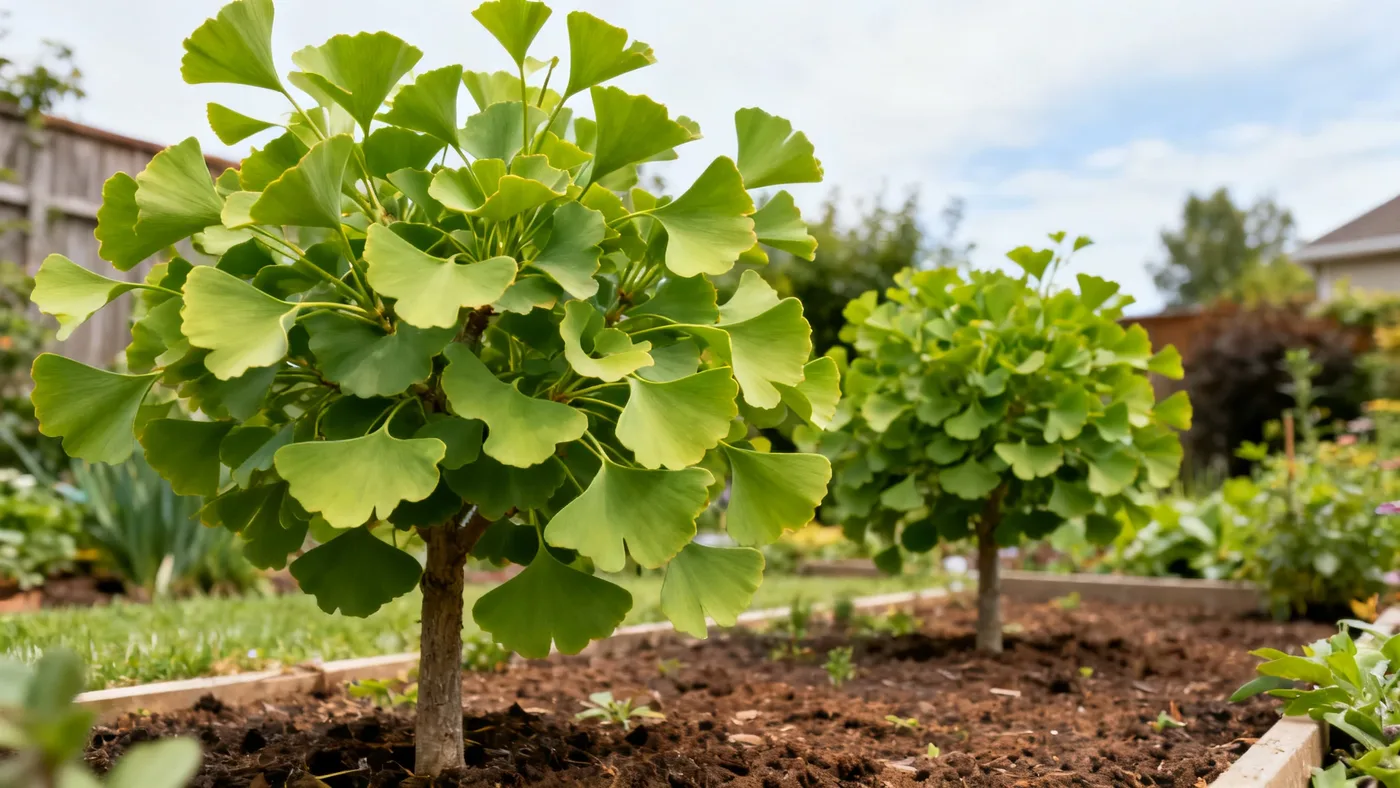
Pruning a Ginkgo Maidenhair Tree: Timing and Technique
Why Ginkgos Need Minimal Pruning
The good news: Ginkgo Maidenhair Trees require minimal pruning compared to many shade trees. They naturally develop a strong, upright form without needing constant intervention. As a slow to moderately growing tree (adding roughly 12 inches per year, or up to 24 inches while young in ideal conditions), your ginkgo won't need aggressive cutting-back to keep it in bounds.
That said, early pruning does matter. When you prune a young ginkgo, you're establishing a central leader and removing competing branches that could create weakness or poor branching angles as the tree ages. Ginkgos can live for several hundred years, with some specimens in China documented over 1,000 years old, so investing time in good structure now pays off for generations.
When to Prune: Late Winter Dormancy
Timing is everything when it comes to how to prune ginkgo tree successfully. Prune your ginkgo in late winter while it's dormant, typically from January through early March in USDA zones 3 through 8 (the plant's native hardiness range). This window, after the coldest part of winter has passed but before new growth emerges, is ideal because:
- The tree is not actively growing, so it recovers quickly from cuts
- You can see the branch structure clearly without leaves obscuring it
- Wounds seal faster in warmer late-winter temperatures than in deep cold
- You won't accidentally remove new growth by mistake
Avoid pruning in fall. A late-season cut stimulates tender new growth that frost will damage, weakening the tree heading into winter. Spring pruning after leaf-out is also less ideal because the tree has already invested energy in new shoots.
Tools and Materials You'll Need
You don't need a long list of specialty equipment. These tools will handle most ginkgo pruning tasks:
- Hand pruners (bypass-type, sharp): for branches up to half an inch thick
- Lopping shears: for branches up to 1.5 inches in diameter
- Pruning saw: for anything thicker than lopping shears can handle; a curved folding saw works well
- Pole pruner (optional): helpful if your tree reaches 25 to 50 feet tall and you need to access high branches safely
- Pruning sealer or wound dressing (optional): research supports that trees seal their own wounds, but a thin coat can protect against insects if you prefer
- Work gloves: leather or nitrile to protect your hands
- Safety glasses: wood chips and debris can fly when cutting
- Sturdy ladder: choose one tall enough to safely reach your working height
Keep your tools clean and sharp. A sharp blade makes a cleaner cut, and a clean blade prevents introducing disease to the tree.
Step-by-Step Pruning Instructions
Follow these steps to prune your ginkgo with confidence:
- Assess the tree's current form. Walk around your ginkgo from all angles. Look for the strongest upright shoot that could serve as the central leader (the main vertical trunk). If your tree is young and has multiple competing leaders, identify which one to keep. If it's established, check whether the current structure is sound or if you need to correct an imbalance.
- Remove dead wood first. Cut out any branches that are clearly dead, diseased, or broken. Make the cut flush against the branch collar (the raised ring of bark at the base of the branch). Dead wood won't recover, so removing it won't harm the tree and improves appearance immediately.
- Remove crossing and rubbing branches. Look for branches that cross over each other or rub together in the wind. These create wounds and poor structure over time. Choose which branch to keep based on its angle and vigor, then remove the other. A branch with a wider angle (closer to 60 degrees from the trunk) is generally stronger than one that forms a narrow, acute angle.
- Thin competing leaders on young trees. If your ginkgo is under 20 feet tall and has two or more strong upright shoots, choose the straightest, most vigorous one as the main leader. Remove the others. This prevents splitting as the tree matures. On established trees with a clear central leader, skip this step.
- Remove lower branches selectively (optional). If you want to raise the crown for clearance under the canopy, remove lower branches. Go slowly with this work; ginkgos don't have excessive branching, and the canopy can look bare if you overdo it. Remove only one or two lower branches per year.
- Avoid heavy heading cuts. Don't cut the main leader or large scaffold branches back to stubs. Ginkgos don't respond well to severe heading (cutting a branch mid-length), and they heal slowly from large wounds. If a branch is in the way, remove it at the base rather than shortening it.
- Step back and evaluate. After each major cut, step back and look at the tree's overall balance. You're aiming for a natural, upright form with well-spaced branches radiating from a strong central leader. Don't over-prune; remember that ginkgos are slow-growing, so aggressive pruning won't speed them up and may stress them.
Pruning Tips for Common Mistakes
When it comes to ginkgo tree pruning tips, here's what to watch for:
Don't create a toothpick. Shaping a ginkgo biloba tree doesn't mean removing most of its branches. The goal is structural health, not a sculptural form. Ginkgos have moderate branching density, so light pruning looks more natural than heavy removal.
Avoid cutting into the branch collar. Make your cut close to the branch collar but don't cut into it. Cutting too far out leaves a stub; cutting into the collar damages the tree's natural seal. The raised ring is your visual guide.
Don't prune in wet conditions. Cutting when branches are wet from rain or frost encourages fungal issues and makes clean cuts harder. Wait for dry conditions.
Never top the tree. Cutting back the top of your ginkgo to reduce height causes multiple weak shoots to emerge below the cut. These don't form a strong leader and spoil the tree's form. If height is an issue, consider a narrow cultivar like 'Princeton Sentry' or 'Fastigiata' instead.
Limit pruning on stressed trees. A ginkgo recovering from transplant shock, severe drought, or pest pressure needs its energy to heal. Skip pruning for a year or two and focus on watering and establishment.
Expected Results and Long-Term Care
After pruning, your ginkgo should look like a stronger version of itself, not dramatically different. If you've done your job well, the tree's improved form will be subtle because good structure looks natural.
Over the next growing season, you'll see new shoots emerge just below your cuts. These grow into branch replacements over several years. Ginkgos don't require annual pruning; light pruning every 2 to 3 years, or as needed when you spot a crossing branch or dead wood, is plenty. Many mature ginkgos benefit from only occasional maintenance pruning.
If you're cutting back ginkgo trees that have been neglected for years, spread the work over multiple seasons rather than removing half the canopy at once. One moderate pruning per year, with lighter follow-up pruning, keeps the tree healthy and balanced.
For more detailed care advice beyond pruning, see the Ginkgo Maidenhair Tree care guide.
Quick Reference Pruning Checklist
| Task | Timing | Goal | Frequency |
|---|---|---|---|
| Remove dead, diseased, or broken wood | Late winter (January–March) | Health and appearance | As needed |
| Remove crossing or rubbing branches | Late winter | Structural integrity | Every 2–3 years |
| Thin competing leaders on young trees | Late winter (trees under 20 ft) | Central leader establishment | Once while young |
| Raise canopy by removing lower branches | Late winter | Clearance and form | Gradually, as needed |
| Step back and evaluate overall form | After each major cut | Balance and natural appearance | Every pruning session |