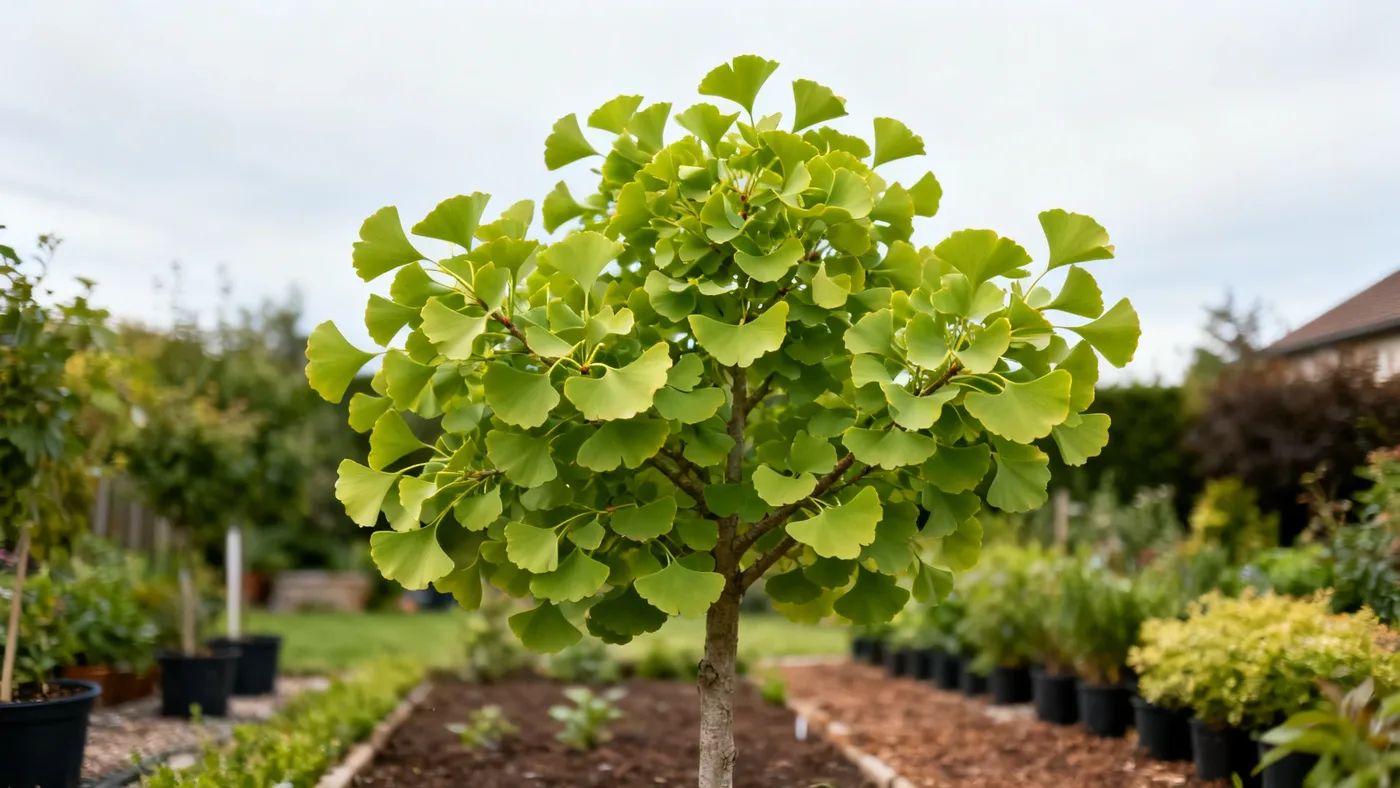
Ginkgo Maidenhair Tree Varieties and Cultivars Compared
Not all ginkgo trees are created equal. While the species Ginkgo biloba is hardy and adaptable across zones 3 to 8, the cultivars bred from it offer real differences in size, shape, and performance. If you are shopping for a ginkgo maidenhair tree, understanding which variety fits your space and your landscape goals makes the difference between a tree that thrives for decades and one that outgrows its place or disappoints you with foul-smelling fruit.
Why Cultivar Choice Matters More Than You Think
The wild ginkgo species grows into a broad, open tree reaching 25 to 50 feet tall and 25 to 35 feet wide in typical landscape settings. For many home gardeners and landscapers, that footprint is too large. This is why nurseries have selected and propagated named cultivars, each tailored to a different need. All the cultivars available today are male trees, which matters enormously. Female ginkgos produce fleshy seed coats in fall that drop with a rancid, vomit-like odor as they decompose. Male trees produce only inconspicuous pollen cones and no fruit, keeping your landscape odor-free. Every cultivar discussed here is male and seedless.
Your choice of variety also affects establishment time, spread, and what you can plant beneath the canopy. A columnar ginkgo tree takes up far less horizontal space than a spreading form, allowing tighter spacing in urban lots or street-side plantings. Dwarf cultivars, meanwhile, eliminate the decades-long wait for a mature tree and work in smaller residential gardens.
The Five Best Male Ginkgo Cultivars: Side-by-Side Comparison
| Cultivar | Form | Mature Height | Mature Width | Best Spacing | Growth Rate | Fall Color | Best For |
|---|---|---|---|---|---|---|---|
| 'Autumn Gold' | Broad spreading | 40-50 ft | 30-35 ft | 25-30 ft | Moderate (12 in/yr) | Golden yellow | Shade, specimen, avenues |
| 'Princeton Sentry' | Narrow columnar | 40-50 ft | 15-20 ft | 8-15 ft | Moderate (12 in/yr) | Golden yellow | Streets, tight spaces, allee |
| 'Fastigiata' | Columnar | 35-45 ft | 12-18 ft | 8-15 ft | Moderate (12 in/yr) | Golden yellow | Urban plantings, narrow lots |
| 'Saratoga' | Dense compact | 25-35 ft | 20-25 ft | 15-20 ft | Moderate (12 in/yr) | Golden yellow | Smaller properties, focal points |
| 'Jade Butterflies' | Dwarf shrubby | 6-10 ft | 6-8 ft | 6-8 ft | Slow to moderate | Golden yellow | Containers, bonsai, small yards |
'Autumn Gold': The Classic Broad Spreading Form
'Autumn Gold' is the workhorse cultivar. It grows into a broad, rounded canopy 40 to 50 feet tall and 30 to 35 feet wide, delivering reliable shade for large properties, parks, and avenue plantings. Its growth rate is steady, around 12 inches per year, and it reaches landscape maturity within 20 or more years.
Pros: Dense, uniform canopy for maximum shade. Proven hardiness and vigor. Spectacular uniform golden fall color that drops within a few days. Excellent for specimen plantings where you want presence. Low maintenance once established.
Cons: Needs 25 to 30 feet of space at maturity, making it unsuitable for small lots. Long establishment period after transplanting. Slow initial growth (up to 24 inches per year only in ideal young-tree conditions). Not appropriate for street-side plantings where width is restricted.
Best for: Large residential properties, estate landscapes, public parks, shade tree canopies where space is not a constraint.
'Princeton Sentry': The Narrow Urban Columnar
If you need a ginkgo tree for a tight space, 'Princeton Sentry' solves the width problem. This narrow columnar ginkgo tree reaches 40 to 50 feet tall but stays only 15 to 20 feet wide, fitting comfortably into street-side plantings and narrow median strips. It demands only 8 to 15 feet of spacing, less than half that of 'Autumn Gold'.
Pros: Excellent for street trees and urban landscapes where horizontal space is limited. Tall silhouette provides vertical interest. Tolerates urban pollution and some road salt exposure, standard ginkgo strengths amplified for harsh city conditions. Same reliable fall color and hardiness as 'Autumn Gold'.
Cons: Still reaches 40 to 50 feet, so overhead utilities and clearance matter. Narrower canopy provides less shade spread. Not ideal for open-field specimen plantings where you want broad presence.
Best for: Urban tree-planting programs, street-side installations, allee plantings along narrow avenues, parking lots with tight spacing, commercial campuses with restricted width.
'Fastigiata': The Compact Columnar Alternative
'Fastigiata' is another columnar cultivar offering similar form to 'Princeton Sentry' but with a slightly more compact profile. It reaches 35 to 45 feet tall and 12 to 18 feet wide, requiring 8 to 15 feet of spacing. This makes it a strong choice where you want columnar structure but a touch more compactness than 'Sentry'.
Pros: Narrower than 'Princeton Sentry', fitting even tighter spaces. Still tall enough for commanding presence. Equally hardy and low-maintenance. Strong architectural branch structure visible in winter.
Cons: Slightly less common than 'Princeton Sentry', potentially harder to source from nurseries. Narrower form means less shade output per tree if shade is your primary goal. Still reaches 35 to 45 feet, so clearance planning is essential.
Best for: Tight urban corridors, narrow parking lot rows, commercial landscapes seeking architectural accent, allees where 'Princeton Sentry' feels too wide.
'Saratoga': The Smaller Property Compromise
'Saratoga' is a dense, compact cultivar that tops out at 25 to 35 feet tall and 20 to 25 feet wide. It grows at a steady moderate rate and reaches a more human-scaled size, bridging the gap between full-size ginkgos and dwarf forms. Spacing of 15 to 20 feet accommodates suburban lots better than 'Autumn Gold'.
Pros: Smaller mature size without sacrificing ginkgo character. Dense branching creates a formal, manicured appearance. Fits mid-size residential properties and commercial campuses with moderate space. Faster to reach visual maturity than 'Autumn Gold'.
Cons: Still a substantial tree at 25 to 35 feet. Less commonly available than 'Autumn Gold' or 'Princeton Sentry'. Fewer established performance records in the landscape, so less predictable than proven standards.
Best for: Suburban residential properties with medium-size yards, smaller commercial sites, focal point specimens where you want impact without overwhelming scale, transitional landscapes between residential and commercial zones.
'Jade Butterflies': The Dwarf Form for Small Spaces
'Jade Butterflies' is fundamentally different from the standard cultivars. This dwarf ginkgo maidenhair tree grows only 6 to 10 feet tall and 6 to 8 feet wide, making it the only practical option for true small-space gardening. It is popular as a bonsai subject and thrives in containers for periods, though not permanently. Spacing is just 6 to 8 feet, or even container-bound.
Pros: Only ginkgo option for small residential yards and container growing. Still delivers the iconic fan-shaped foliage and brilliant fall color. Excellent for bonsai enthusiasts. No waiting decades for a mature tree. Works in front-yard plantings, containers, and tight corner locations.
Cons: Much less shade output than full-size cultivars. Harder to source, typically only from specialty nurseries. Less historical performance data in landscapes. Still ginkgo hardy, but less information exists on long-term durability in small spaces.
Best for: Small urban gardens, container plantings, bonsai cultivation, residential properties too small for standard ginkgos, courtyards and entryway focal points.
Which Cultivar Should You Choose?
Start with your available space. If you have 25 to 30 feet in all directions, 'Autumn Gold' rewards you with the broadest, densest canopy and the most reliable shade. If you are planting along a street or in a median, 'Princeton Sentry' or 'Fastigiata' is the clear choice. For properties with moderate space, 'Saratoga' offers a polished, smaller-scale ginkgo without resorting to dwarf forms. If your space is a small urban yard or container on a patio, 'Jade Butterflies' is your only practical option.
All five cultivars are male and produce no fruit odor. All are hardy in zones 3 to 8. All deliver the same remarkable longevity, commonly cited at several hundred years in favorable conditions. The differences are form and size, not hardiness or maintenance burden.
For detailed guidance on planting and establishment, see our guide to how to plant a ginkgo maidenhair tree the right way. For ongoing care once your tree is established, read our complete ginkgo maidenhair tree care guide.
Quick Reference: Cultivar Selection Checklist
| Your Situation | Pick This Cultivar | Why |
|---|---|---|
| Large property, shade priority | 'Autumn Gold' | Broad form, mature height 40-50 ft, width 30-35 ft |
| Street or median planting | 'Princeton Sentry' or 'Fastigiata' | Columnar forms, 8-15 ft spacing, urban-hardy |
| Mid-size property, formal appearance | 'Saratoga' | Compact, 25-35 ft height, dense branching |
| Small yard or container gardening | 'Jade Butterflies' | Dwarf, 6-10 ft height, bonsai-suitable |
| Any location, odor concerns | Any male cultivar listed here | All are seedless, no fruit odor |