Propagating a Ginkgo Maidenhair Tree from Seed or Cuttings
One fall, a customer told us a friend had handed over a sack of ginkgo seeds and called them a free shade tree. Twenty-some years on, that tree dropped its first fruit onto the driveway. Free is the wrong word for what that customer got.
Any seed from a backyard tree is a coin toss on sex, with a wait of decades before you learn the result. A female seedling gives you the mess. A male gives you the tree you wanted. You can't tell which until it is old enough to matter.
This guide covers everything you need to know about starting a ginkgo yourself, from collecting and cleaning seed to chilling, sowing, rooting cuttings and choosing between a seedling and a known clone.
Collecting Seeds Without Trusting the Folklore
Walk under a female ginkgo in October and the sidewalk tells you what is ripe: soft, tan-orange fruits, split and mashed underfoot, and a smell nobody forgets. The odor comes from butanoic acid, which is why cities plant males. For you, it means the seed collects itself. Most advice says to collect in fall, and that part holds up.
Where to Gather Seed
Female street and park trees are the usual source. Ask permission if the tree is on private land, and check local rules for public property. Take seed from a tree you can see, because a female with no male anywhere nearby can drop fruit that looks perfect and holds nothing inside.
Which Advice Holds Up
Pick up fruit that has fallen on its own. Fruit still hanging green is not ready, and prying it off the branch wastes your afternoon. That one is sound.
The idea that bigger fruit means better seed has no support in anything we have read. Leave it alone. Choose by condition, not size: skip anything dried hard, moldy or chewed through.
One more point to weigh before you gather. This seed carries the parent's mother line but an unknown father, so you are collecting an unknown, not a copy.
Cleaning the Pulp Off Ginkgo Maidenhair Tree Seed
A bucket of ginkgo fruit left in a garage for one weekend will convince you to do this job outdoors. The fleshy coat holds the smell, and it also holds the juice that bothers skin. The plant's toxicity is rated low, and skin irritation is minor and brief. We still wear gloves, because "minor" varies from person to person.
Work through these steps in order:
- Put on waterproof gloves and old clothes, and work outside.
- Soak the fruit in a bucket of water until the pulp softens and slips.
- Rub the fruit against a coarse mesh screen or rinse it through a colander until only the pale, hard-shelled seed is left.
- Drop the cleaned seed in a bowl of water. Keep the ones that sink and discard the ones that float, since floaters are usually empty.
- Rinse again and let the seed dry briefly on a towel, away from direct sun.
Wash your tools and hands afterward. Do not eat the seed, and do not let children handle the pulp. Our guide to ginkgo seeds, smell and cleanup covers the mess side in more detail, and the question of risk to people and pets has its own guide.
Does Cold Stratification Really Matter?
Customers ask us whether they can skip the refrigerator step and just sow. You can. Whether you should depends on how much patience you have. The UConn plant database describes cold stratification as beneficial, not mandatory, and that wording is accurate. Chilled seed is the safer bet, and unchilled seed is the gamble.
What Chilling Does
Seed from a tree that lives through hard winters is built to wait out the cold before it sprouts. A chilling period tells the embryo winter has passed. Ginkgo is hardy across a wide range of zones, so this wiring has real use outdoors.
How to Do It
Mix the cleaned seed with barely damp sand or peat in a zip bag and keep it in the refrigerator. Check it every week or two for mold and moisture. Our sources do not give a length or exact temperature, and we won't invent one. Ask your local extension service what they recommend for your area.
The lazy method also works for many people: sow in fall in a pot, set it outdoors in a sheltered spot, and let winter do the chilling.
If You Skip It
Expect germination to come later and more unevenly, with some seeds never showing. That is a cost, not a disaster, and it is why we say chill when you can.
Sowing a Ginkgo Maidenhair Tree Seed in a Pot
A ginkgo seed sown in spring can sit in its pot for weeks looking like nothing happened. Resist the urge to dig it up. Germination in this species is slow and uneven, and a pot that looks dead in week three is not proof of anything.
Use a deep pot with drainage holes and a loose, well-drained mix. Lay the seed on its side and cover it with a thin layer of mix, about its own thickness. Water until the mix is evenly damp like a wrung-out sponge, then keep it there. Soggy mix rots seed, and dry mix stalls it.
Put the pot where it gets bright light. Full sun is the long-term goal, though a small seedling does fine in lighter conditions. Keep the pot out of the hottest afternoon sun in its first season.
What Year One and Year Five Look Like
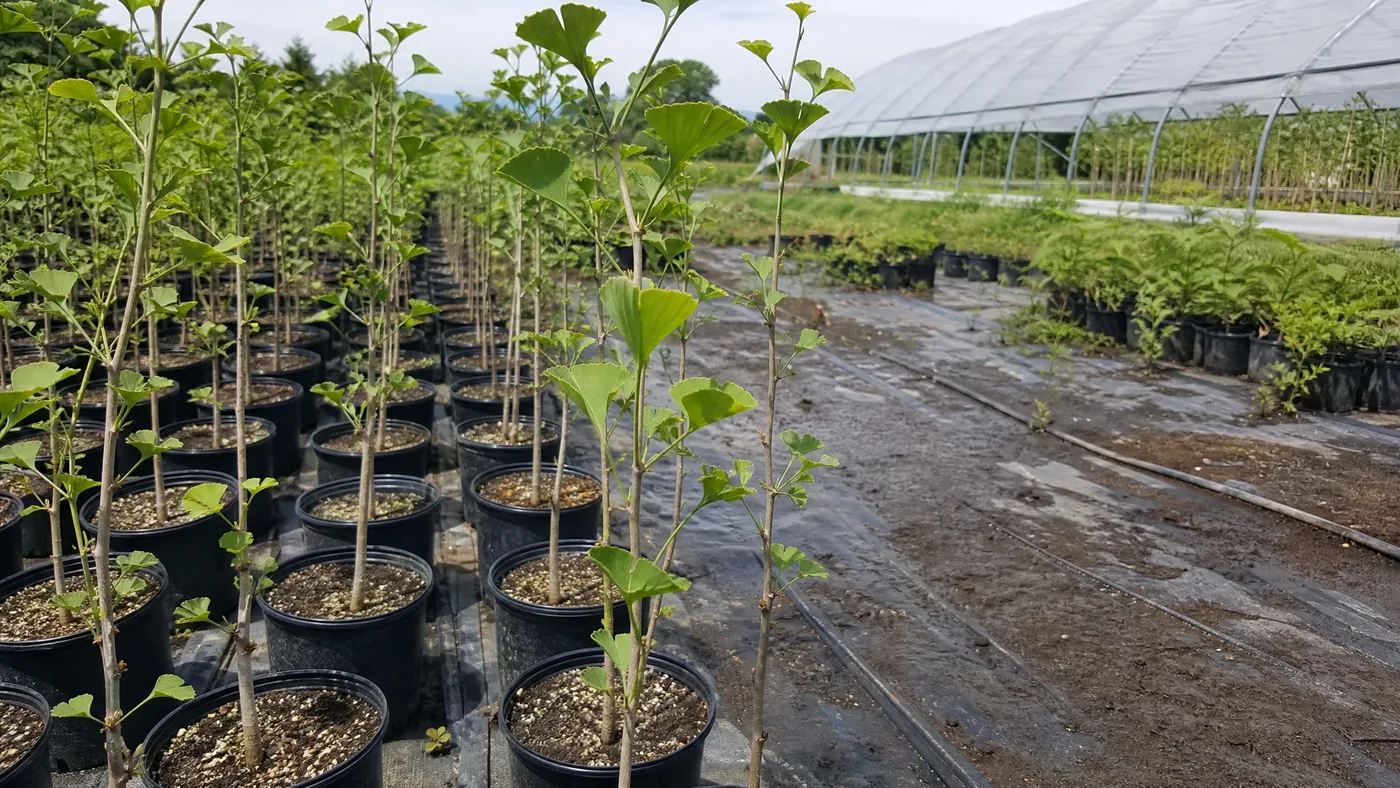
Ginkgo is slow in its early years, and a seedling gives you little to show for it. The first summer produces a few fan-shaped leaves on a thin stem. By year five you may have a sapling that looks like a small stick with leaves, nothing like the screen or shade tree you were picturing. Plan your yard around that, not around the 50 to 80 feet the species reaches at maturity.
Grow it on in the pot until the roots fill it, then move it up a size or plant it out. Our planting guide covers the installation step.
Cuttings: What the Evidence Says About Rooting
Ask five growers about ginkgo cuttings and you will hear five stories, most of them ending in a dead stick. The sources agree on the basic method, but none of them gives a success rate. We won't invent one. Treat cuttings as a gamble, and take more than you need.
The UConn plant database says cuttings can be softwood or semihardwood, collected in early summer. The University of Washington describes semi-ripe midsummer cuttings treated with rooting hormone, and notes that cuttings should root by spring if kept moist. That timeline is long, and you should plan for it.
Taking and Rooting the Cutting
- Cut a healthy shoot of current-year growth that has begun to firm up at the base but is still flexible at the tip.
- Strip the lowest leaves and dip the cut end in rooting hormone.
- Stick the cutting into a pot of damp, well-drained rooting mix, and keep the mix moist without letting it turn soggy.
- Shelter the pot from hot sun and wind through the first winter, and wait until spring before you tug on anything to test for roots.
Softwood cuttings wilt fast and lose more to rot. Semi-ripe wood is slower but holds up better, which is why we lean that way.
Whatever roots will carry the parent's sex, which matters more than the rooting itself.
Why a Ginkgo Maidenhair Tree Seedling Takes Decades to Reveal Sex
We often see a young seedling and a hopeful owner who is sure the leaves look "male". They don't, or at least nothing reliable says so. There is no reliable way to select a male plant from a seedling until it fruits. We trust that over any trick involving leaf shape, bark or growth rate.
The wait is long. Clemson says 20 to 30 years for a seed-grown ginkgo to reach reproductive maturity and show its sex. Many people read that as "about twenty" and plan on the short end. Plan for the long end.
What That Means for Your Planning
You are planting a tree whose final identity you won't know for a generation. If it turns out female, you get the rancid-smelling fruit described above, and someone has to remove it or the tree. Plant it where either outcome is tolerable, away from walks, patios and doorways.
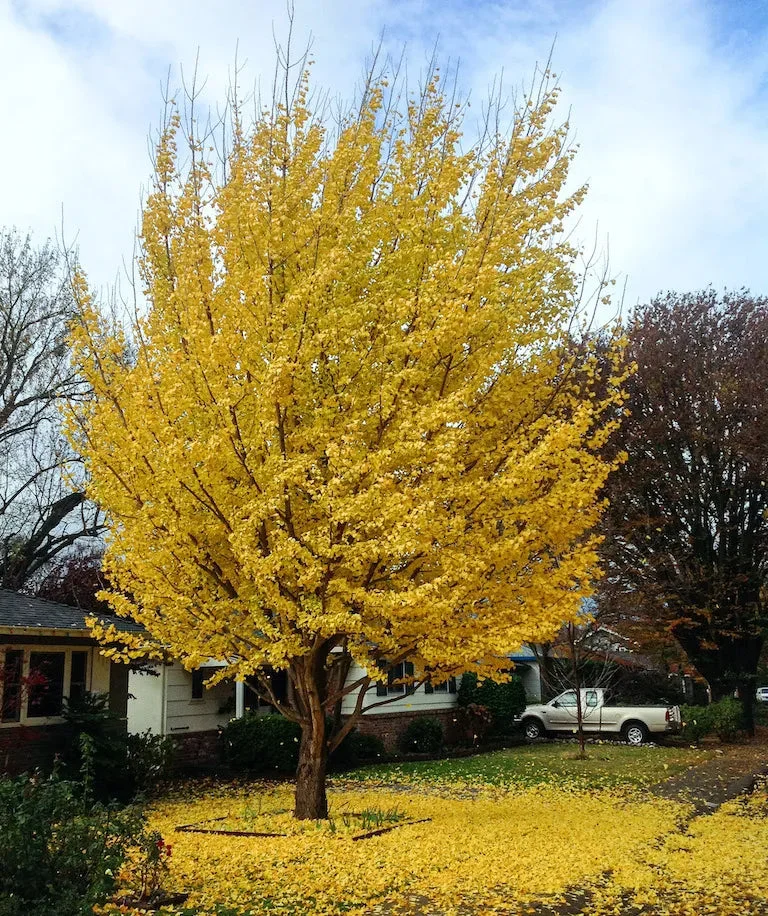
Give it room too. A mature ginkgo spreads 30 to 40 feet, and sometimes wider. The tree will outgrow a spot chosen for a stick. Our size and growth rate guide shows what to expect as it ages.
Choosing Between Seedling Luck and a Known Clone
Here is how the three routes compare when you set them side by side.
| Route | What you get | Main risk |
|---|---|---|
| Seedling from collected seed | Unknown sex, unknown traits | A female after 20 to 30 years |
| Cutting from a known male | A copy of that tree, male | Low and uncertain rooting |
| Named male cultivar | Known sex and form | Cost of a purchased tree |
If you want the experience of growing a tree from a seed, go ahead and enjoy it. If you want a male tree, seeds are the wrong tool. A cutting from a tree you have watched drop no fruit is the better odds. That tree must be known male, and fruiting is how you know.
Named cultivars are propagated mainly by grafting, which is outside most home setups. A named cultivar is the one sure way to get a male. See our cultivar comparison and buying guide for what is available.
A Ginkgo Maidenhair Tree Worth the Long Wait
Collect fallen fruit in autumn, clean it outdoors in gloves, keep the seed that sinks, chill it if you can, and sow it in a deep pot kept evenly damp. Root cuttings in midsummer with hormone and expect losses. Neither method tells you the tree's sex.
The calendar is simple: seed this year, a sapling in a few, an answer in two decades.
Ginkgo Maidenhair Tree
Nursery-grown Ginkgo Maidenhair Tree in sizes from 1 Gallon Container 1-2' Feet Tall, shipped to your door.
From $80.55
Shop Now →Ginkgo does best on our farms in full sun, with soil that stays moist but drains freely. We check the roots, trunk and buds of every tree before it goes out, and we ship only top-quality plants we would put in our own ground. If seed and cuttings sound like a long road, meet the Ginkgo we have ready now.