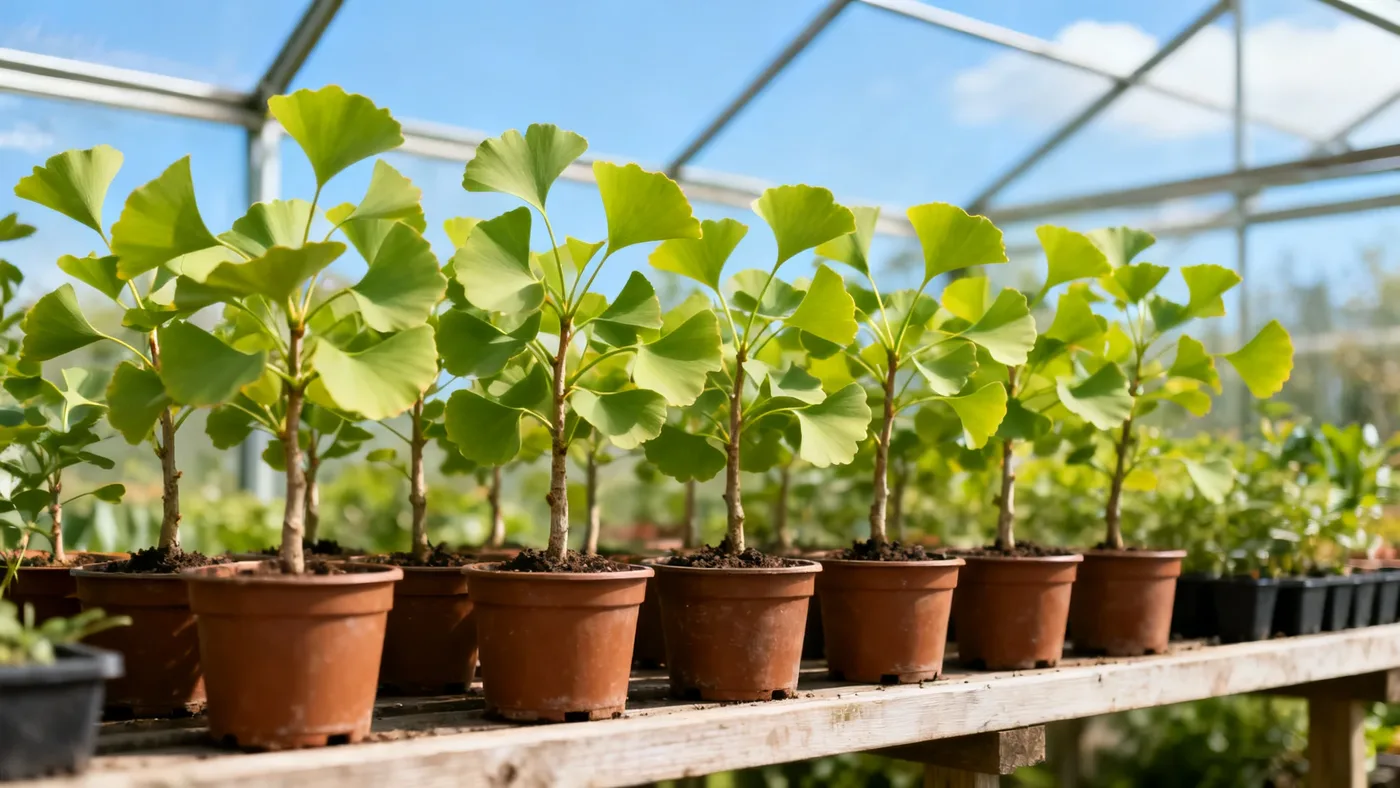
Ginkgo Maidenhair Tree Buying Guide: Sizes and What to Look For
Buying a Ginkgo Maidenhair Tree is a commitment to a long-lived landscape centerpiece that will outlive you by centuries. With proper selection at the nursery, you'll start with a healthy young tree and avoid the one mistake that ruins the experience for most homeowners: buying a female tree. This guide walks you through what to inspect, which cultivars fit your space, container options, and exactly what red flags should send you to another nursery.
Why Male Trees Matter: The Single Most Critical Decision
Ginkgo trees are dioecious, meaning individual trees are either male or female. This distinction is the most important factor when buying a ginkgo biloba tree. Female trees produce a fleshy seed coat that drops in fall with a strong, rancid, vomit-like odor as it decomposes. This smell persists for weeks and is notoriously difficult to clean up or ignore. Male trees have no fragrance issue whatsoever and are the only choice for home planting and urban landscapes.
Before purchasing, confirm the tree is a named male cultivar. Look for labels listing names like 'Autumn Gold', 'Princeton Sentry', 'Fastigiata', 'Saratoga', or 'Jade Butterflies'. Any tree labeled only as "Ginkgo" or "Maidenhair Tree" without a cultivar name may be seed-grown and could be female. Always ask the nursery staff which sex the tree is. If they cannot confirm it, do not buy it.
What to Look for in a Healthy Young Tree
Walk through these checkpoints before selecting your tree:
- Bark condition. The bark should be smooth and free of cankers, deep cracks, or oozing wounds. Slight surface texture is normal on young trees, but avoid any tree with major bark damage or splits.
- Branch structure. Look for a strong central leader, the main upright stem. The tree should have balanced branching without major crossing or rubbing branches. Avoid trees with codominant leaders (two competing main stems) because they create structural weakness later.
- Foliage color and fullness. Leaves should be green and uniform in color. Pale, yellowing, or sparse foliage signals nutrient deficiency, root stress, or pest damage. A full, dense canopy shows vigor.
- Root system. If the tree is in a container, gently lift it and look at the root collar where roots meet the stem. Roots should not visibly girdle the stem or spiral excessively. Some root circling is normal in nursery stock, but excessive spiraling indicates the tree has been in that pot too long.
- Signs of pests or disease. Inspect undersides of leaves and branch crotches for scale insects or mealybugs. Although ginkgo is essentially disease-free, any visible pest damage should be avoided.
- Overall vigor. The tree should be firm and upright, not wilting or showing signs of drought stress. Avoid any specimen that looks neglected or water-stressed.
Container Sizes Explained
Nursery-grown ginkgo trees are typically sold in three standard sizes. Each represents a different stage and price point:
- Quart containers. Young trees, usually 1 to 2 years old and 12 to 24 inches tall. These are the most affordable option and are fully viable. They take longer to reach shade-tree size but establish well when planted in the ground. Best for patient gardeners or tight budgets.
- #1 containers. Mid-size trees, typically 2 to 4 years old, 24 to 36 inches tall. A practical middle ground between cost and usable size. These trees show their form more clearly and fill in your landscape within a reasonable timeframe.
- #3 containers. Larger trees, 3 to 5+ years old, often 3 to 5 feet tall or taller. More immediate visual impact and higher cost. These are closer to landscape-ready size and reveal branching structure clearly before planting.
Young trees can remain in containers for a period, but ginkgos are not well-suited to permanent container life. Plan to plant them in the ground in full sun with well-drained soil as soon as you have a suitable location. Container-grown dwarfs like 'Jade Butterflies' can stay potted longer than standards, but long-term soil health suffers.
Top Cultivars for Different Spaces
All of the following are male cultivars, seedless and reliable:
'Autumn Gold'
The industry standard for home gardens. This male cultivar grows with a broad, spreading form, reaching 25 to 35 feet tall and wide at maturity. It's robust, adaptable to zones 3 through 8, and delivers the classic ginkgo silhouette with reliable golden fall color. Choose this if you have room and want the full visual impact.
'Princeton Sentry'
A narrow columnar male ideal for tight spaces and street-side planting. It grows 25 feet or taller but only 8 to 15 feet wide. Columnar forms work on narrow lots, against house walls, and in avenue plantings where you want ginkgo's drought tolerance and urban resilience without the width.
'Fastigiata'
Another columnar male cultivar offering a compact, upright form. Similar space-saving qualities to 'Princeton Sentry'. Excellent for small urban gardens where standard spreads would overwhelm the site.
'Saratoga'
A male cultivar with a dense, compact form, striking a middle ground between standard and columnar widths. Useful for medium-sized properties where you want ginkgo's toughness and salt tolerance without extreme spread.
'Jade Butterflies'
A dwarf, shrubby male form that can be container-grown for an extended period or kept more compact in landscape plantings. Unusual and excellent for gardeners with very limited space or who want ginkgo as an accent rather than a shade tree.
Where to Buy a Quality Ginkgo Tree
Your best sources are:
- Local and regional nurseries. Trees in your area are already acclimated to your climate. Staff can answer specific questions about cultivar performance and confirm the tree is male. Look for nurseries specializing in shade trees or those with knowledgeable plant experts.
- Specialty tree nurseries. If local options are limited, wholesale tree growers and specialty nurseries can ship across zones 3 to 8 during spring and fall planting seasons. Always ask about shipping costs and any plant health guarantees upfront.
- Certified nurseries. Look for memberships in your state nursery association or certification programs. These operations meet professional standards for plant health and accurate labeling.
- Timing. Purchase in spring or fall to plant immediately. Avoid buying a containerized ginkgo in midsummer if you intend to plant it, as heat stress makes establishment harder. Bare-root stock (roots not in soil) occasionally appears in spring at lower cost but requires immediate planting.
Red Flags to Avoid
- No cultivar name. A tree labeled only "Ginkgo" or "Maidenhair Tree" without a cultivar name may be seed-grown and potentially female. Always walk away.
- Cannot confirm male sex. If the nursery staff cannot tell you the tree is male, do not purchase it.
- Heavy pest infestation. While ginkgo resists most pests, heavy scale or mealybug damage means starting with a compromised specimen.
- Girdling or tightly circling roots. Roots wrapping tightly around the inside of the pot often fail to break out into soil and can strangle the tree as it grows. Some mild circling is normal, but excessive spiraling is a problem.
- Broken central leader or major branch damage. Severe breakage or a missing leader signals stress or poor handling. Young trees can recover from minor damage, but major injury sets them back.
- Visible drought stress. Wilting, leaf drop, or yellowing foliage indicates neglect. Choose a healthier specimen.
- Root rot or soft wood. Press gently on the stem; it should be firm. Soft or mushy wood indicates disease or waterlogging.
Key Features to Compare When Deciding Between Trees
| Feature | What Matters |
|---|---|
| Cultivar and Sex | Only named male cultivars; no females. 'Autumn Gold' for space, 'Princeton Sentry' for tight spots, 'Jade Butterflies' for containers or accent planting. |
| Container Size | Quart for budget-conscious buyers, #1 for balance, #3 for immediate impact. All require in-ground planting for long-term health. |
| Height and Age | Taller trees (5+ feet) cost more but fill space faster. Younger stock (1-3 feet) adapts to the planting site more readily. |
| Root Development | Roots should be present but not girdling the stem. Some circling is normal; excessive circling is a red flag. |
| Branch Structure | Look for a strong central leader and balanced branching. Avoid codominant stems. |
| Overall Vigor | Firm wood, green foliage, no signs of pest damage or drought stress. |
| Form Type | Standard (25-35 ft wide) for large spaces, columnar (8-15 ft wide) for narrow sites, dwarf for containers or accents. |
After Purchase: Next Steps
Once you've selected a healthy ginkgo and brought it home, the next phase is planting and establishment. Ginkgo's slow to moderate growth rate (approximately 12 inches per year under typical conditions, up to 24 inches per year while young in ideal conditions) means proper planting technique and early care set the tone for decades of health. For detailed instructions on planting, watering, mulching, pruning, and long-term care, see the Ginkgo Maidenhair Tree Care Guide.
Quick Reference Checklist
| Checkpoint | Good Sign | Red Flag |
|---|---|---|
| Cultivar | Named male: 'Autumn Gold', 'Princeton Sentry', 'Fastigiata', 'Saratoga', 'Jade Butterflies' | Unlabeled, seed-grown, or female |
| Sex Confirmation | Nursery staff confirm male | Cannot confirm, or female offered |
| Bark | Smooth, free of cankers or splits | Oozing wounds, major cracks, storm damage |
| Central Leader | One strong upright stem | Codominant leaders or broken top |
| Branching | Balanced, no major crossing | Unbalanced, crossing, rubbing branches |
| Foliage | Full canopy, uniform green | Sparse, pale, or yellowing leaves |
| Roots | Present but not girdling stem | Heavy spiraling or girdling |
| Pests/Disease | No visible insects or damage | Scale, mealybug, or soft wood |
| Overall Vigor | Firm stem, upright, healthy look | Wilting, drooping, or neglected appearance |
| Container Size | Quart, #1, or #3 (zones 3-8) | Root-bound or severely underwatered |