Male vs Female Ginkgo Trees: How to Tell and Why It Matters
Picture a loading dock with two crates of bare-root ginkgo saplings. The stems are the same pencil-thin gray, the buds match, and the heights agree to the inch. Only one crate carries a tag you can trust. Plant the wrong one and you will not find out for 20 years or more, and by then the tree is part of your yard.
A ginkgo is either male or female, and the female drops fleshy, foul-smelling seeds every fall. That is why the choice matters for walks, patios and curb strips. It also has to be made at the counter, because the tree itself will not tell you until it is old.
This article talks about how ginkgo sex works, why nurseries sell grafted males, and what to do if a female arrives, and it answers the questions customers ask us most. Read on to learn what can and cannot be known about a young tree, how to read a tag and an invoice, and why a ginkgo never changes sex.
Ginkgo Maidenhair Tree Seedlings Against Grafted Stock
A ginkgo grown from seed is a coin toss. The long-term Blandy planting is the clearest count we know of: when the final tally was made in the 1980s, 157 trees were female and 144 were male. That is a roughly even split. Hand a hundred seedlings to a hundred yards and about half of those yards end up with a female. Nothing about a young plant tells you which half you got.
Purdue Extension is blunt about it: there is no way to discern a male from a female at the seedling stage. UF/IFAS agrees that there is no reliable way to select a male plant from a seedling until it fruits. So the only way to know the sex of a young ginkgo is to know where it came from.
What the Seedling Crate Holds
Seedlings are grown from seed, so each one is a fresh draw. They are usually the cheaper plant, and that is the appeal. The trade is a roughly even chance of a female that will not show herself for decades. One of the most common questions we get is whether you can plant a few seedlings and remove the females later. You can, but the wait is 20 years or more, and by then the tree has shaped your shade, your walk and your budget.
What the Grafted Crate Holds
Grafted stock is a different kind of plant. A piece of a tree already known to be male is joined to a rootstock, so the top of the plant carries that male's sex. UF/IFAS lists propagation as seed or grafting males, and that is exactly why a grafted, named cultivar is the safe purchase. The sex was settled before the plant was ever shipped.
Identical Ginkgo Leaves Now, Very Different Trees at Thirty
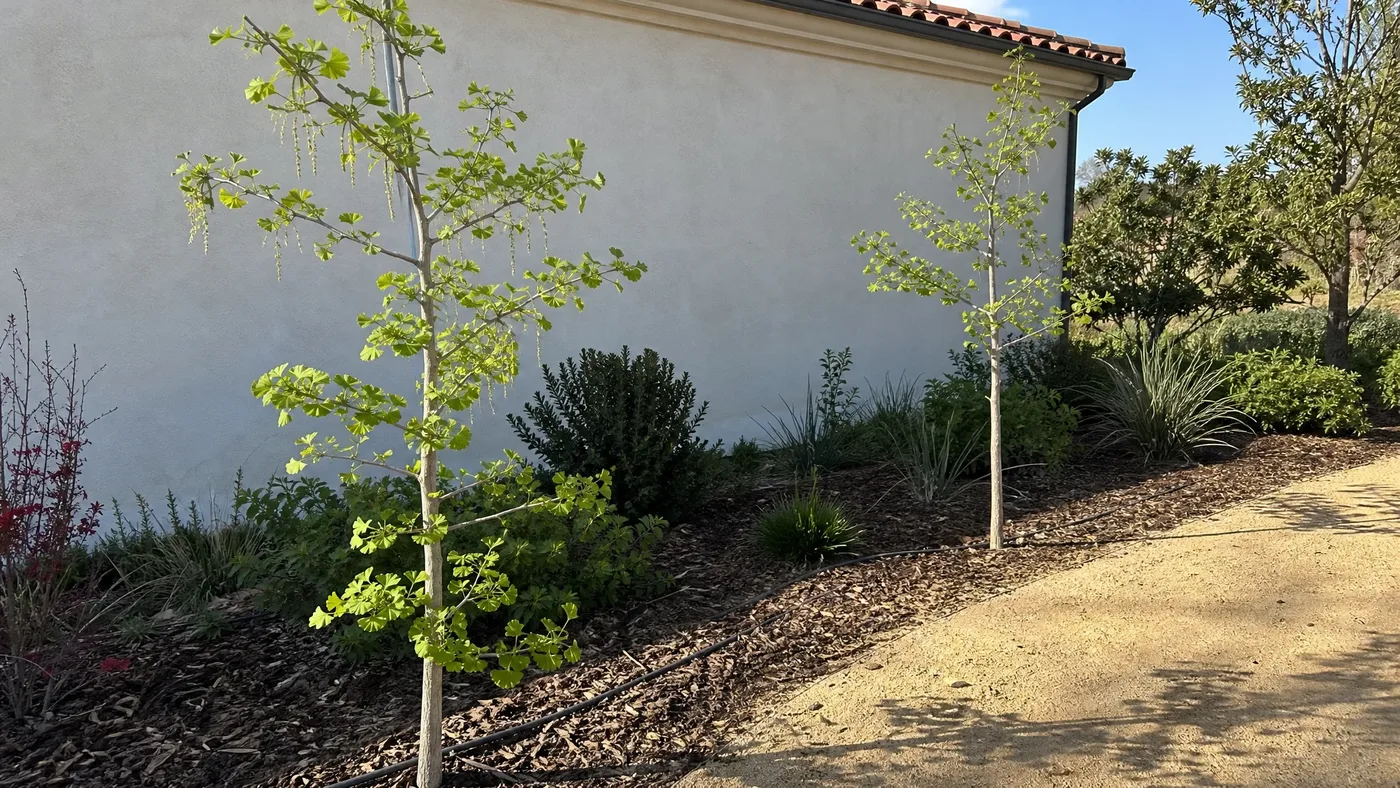
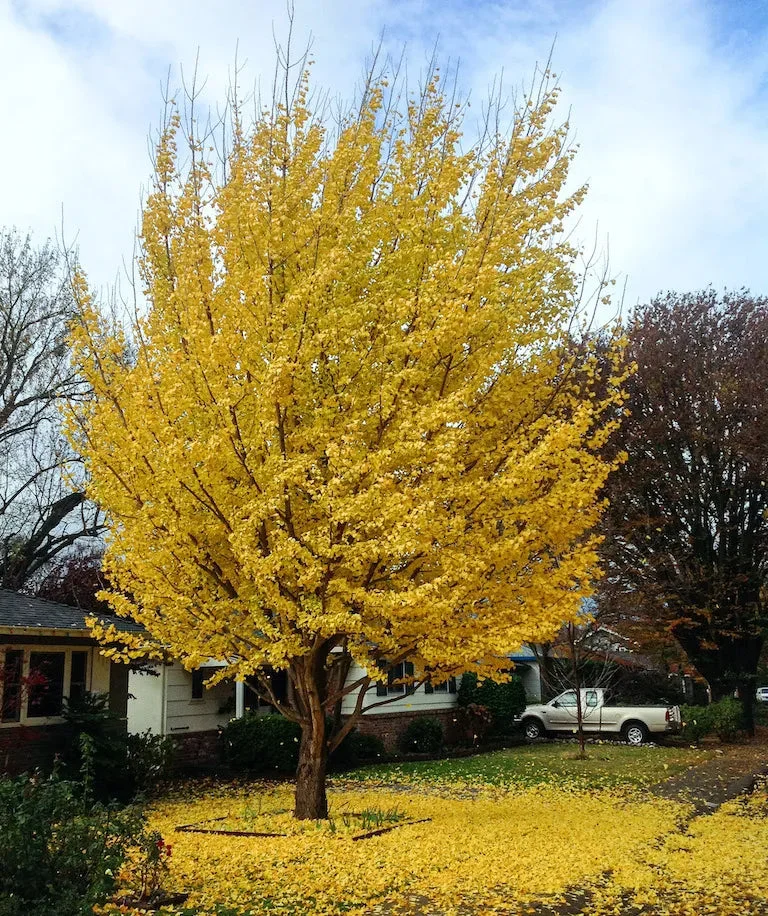
At year five, a male and a female ginkgo stand side by side and look like the same tree. Same fan-shaped leaves, same slow, upright start, same yellow fall color. Customers often ask us whether the leaves, the bark or the growth rate give it away. They do not. The sex is there from the start, but nothing you can see or measure on a young tree reveals it.
Seed-grown ginkgos need 20 to 30 years to reach reproductive maturity and reveal their sex. Until then the tree gives you nothing to work with, which is why guessing from a photo or a nursery row does not work.
How the Picture Changes Over Time
The table below follows a single planting through the years, from the day it arrives to the day it either fruits or does not.
| Stage | What you can tell |
|---|---|
| Bare-root sapling | Nothing. Male and female look alike. |
| Years 1 to 10 in the ground | Nothing. Growth, leaves and fall color do not sort the sexes. |
| Around 20 to 30 years, seed-grown | A female shows herself by dropping fleshy seeds in fall. |
| Grafted named male, any age | Sex is known from the cultivar name on the tag and the invoice. |
The Signs That Show Late
The sign is the seed, and it is hard to miss. Those fleshy seeds, which most people call fruit, fall in autumn and rot on the ground. They contain butanoic acid and smell rancid once they land. Your nose will tell you before your eyes do. A tree that reaches 50 to 80 feet, as the species can, makes a lot of sidewalk to cover in that smell.
A male never produces these seeds, which is why the tag matters more than anything you can observe. Our guide to ginkgo seeds, smell and cleanup covers what to do if you already have a fruiting tree.
What Nurseries Ship for a Ginkgo Maidenhair Tree
Because sex cannot be read from a young plant, responsible nurseries solve the problem upstream. They propagate named male cultivars by grafting and sell those. The reasoning is plain: seeds from female trees are messy and have foul-smelling flesh, so planting grafted male trees is often preferable. That single sentence is the whole market logic behind the ornamental ginkgo.
Unlabeled seedlings still circulate, usually sold as plain Ginkgo biloba, a species label, or a bare-root bundle at a low price. Those are the plants with a coin-toss tag. Our buying guide explains why we treat a named male as the baseline, and the cultivar comparison shows what each male looks like once it matures.
How to Confirm It at Purchase
You do not need a horticulture degree to check this. You need the tag, the plant and the paperwork to agree. Look for these points before you pay:
- The tag shows a cultivar name in quotation marks after Ginkgo biloba, not the species name alone.
- The seller will tell you, without hesitation, that the plant is grafted and that the cultivar is a male.
- Grafted plants often show a union near the base of the stem, so look for a slight bulge or a change in bark texture low on the trunk.
- The cultivar name on the invoice matches the name on the tag, word for word.
If any of these is missing, treat the plant as a seedling of unknown sex. A friendly answer that is not backed by a cultivar name is not a guarantee.
If a Female Ginkgo Maidenhair Tree Slips Into Your Order
The wrong move is the common one: plant it and hope. A tree that was supposed to be a named male but is not will sit quietly for 20 years or more. Then it fruits, and the seller, the invoice and the receipt are long gone. We often see this story in reverse, where someone lost the paperwork years ago and has no way to prove what they bought.
The right move depends on when you notice the problem. Before it is in the ground, you have the most options. After it fruits, you have fewer, but you still have some.
Before Planting, Report It at Once
If the tag or invoice does not name a male cultivar, or the two do not match, stop and contact the seller before the plant goes in. Photograph the tag, the plant and the invoice together. Ask for a replacement or a refund under the seller's policy. A planted tree is much harder to return than a bagged one.
After It Fruits, Remove or Rework
If a tree you were told was male starts dropping seeds, you have three realistic choices:
- Keep the invoice and tag photos, and contact the seller. The record is your only leverage.
- Remove the tree and replace it with a grafted named male. This is the cleanest fix.
- Ask a certified arborist or your local extension service whether grafting a male scion onto the existing tree is practical. We would not count on it for a large trunk.
In the meantime, wear gloves when you clear the fallen seeds. The severity is low, and skin irritation from the pulp is minor and short-lived. The smell is the bigger problem than the pulp.
Why a Ginkgo Maidenhair Tree Cannot Change Sex
One of the most searched questions about this species is whether a male ginkgo can turn female. Our answer is no. None of the university sources we rely on describes a tree switching. They describe sex being revealed late, and that is the whole story. A tree that fruits at 25 was a female at planting. You simply could not see it.
The myth survives because the timing looks like a change. Someone plants an unlabeled seedling, assumes it is male because it has been quiet for two decades, and then it drops seeds. From the yard it looks like a switch. From the tree's side, nothing changed except its age.
The Odd Branch Story
Stories of one branch behaving differently usually have a plain explanation. A shoot that grows from below the graft union on a grafted tree is the rootstock, which is a seedling of unknown sex, and it can differ from the named male above it. Prune it off and the problem is gone. Fruit lying under a tree can also come from a female neighbor you had not noticed. If a photo shows something unexplained, send it to your local extension service.
Late-Showing Sex Is Not a Switch
It helps to keep two ideas apart. Sex is fixed from the seed. Sex is visible only at maturity. A seedling tree that fruits at year 25 did not change, and a seedling that has never fruited is not proof of a male. Only a grafted cultivar gives you an answer you can count on. Our ginkgo FAQ covers more of the questions that come up around this.
Reading the Tag Before the Truck Leaves
The last step is a short sequence you can run at the counter, at the loading dock or at checkout. It takes a few minutes and spares you decades of guessing. Work through it in this order, and do not skip a step because the seller seems friendly:
- Read the tag. Look for Ginkgo biloba followed by a cultivar name in quotation marks.
- Ask whether the plant is grafted and whether the cultivar is a male. Listen for a direct answer.
- Check the base of the trunk for a graft union.
- Compare the tag to the invoice. The cultivar name must match exactly.
- Photograph the tag and the plant before you leave.
- File the invoice somewhere you will find it in 20 years.
If the answers do not line up, walk away or ask for a different plant. A missing cultivar name is the one thing you cannot fix later.
Choosing a Male Ginkgo Maidenhair Tree With Confidence
Male and female ginkgos look the same until a tree is 20 to 30 years old, so appearance is no help and a seedling is a gamble at roughly even odds. The grafted named male is the plant we would choose for nearly every yard, and the seedling is for people who truly do not mind either outcome. A ginkgo cannot change sex. It only reveals it, and only when it is mature.
So the order of operations is simple: confirm the tag, then the cultivar name, then the invoice.
Ginkgo Maidenhair Tree
Nursery-grown Ginkgo Maidenhair Tree in sizes from 1 Gallon Container 1-2' Feet Tall, shipped to your door.
From $80.55
Shop Now →Full sun and moist, well-drained soil are the conditions behind every Ginkgo on our farms. Raising and selling top-quality trees is our work as a small business with farms of our own. Once you have settled the male-or-female question, take a look at our shop when you are ready to plant.