Ginkgo Maidenhair Tree FAQ: 12 Questions Answered
Whether you're considering planting a Ginkgo Maidenhair Tree or already have one in your yard, these common questions about ginkgo trees cover everything from basic care to cultivar selection. Read on for facts about this ancient, resilient species.
Basics: What You Should Know
What exactly is a Ginkgo Maidenhair Tree?
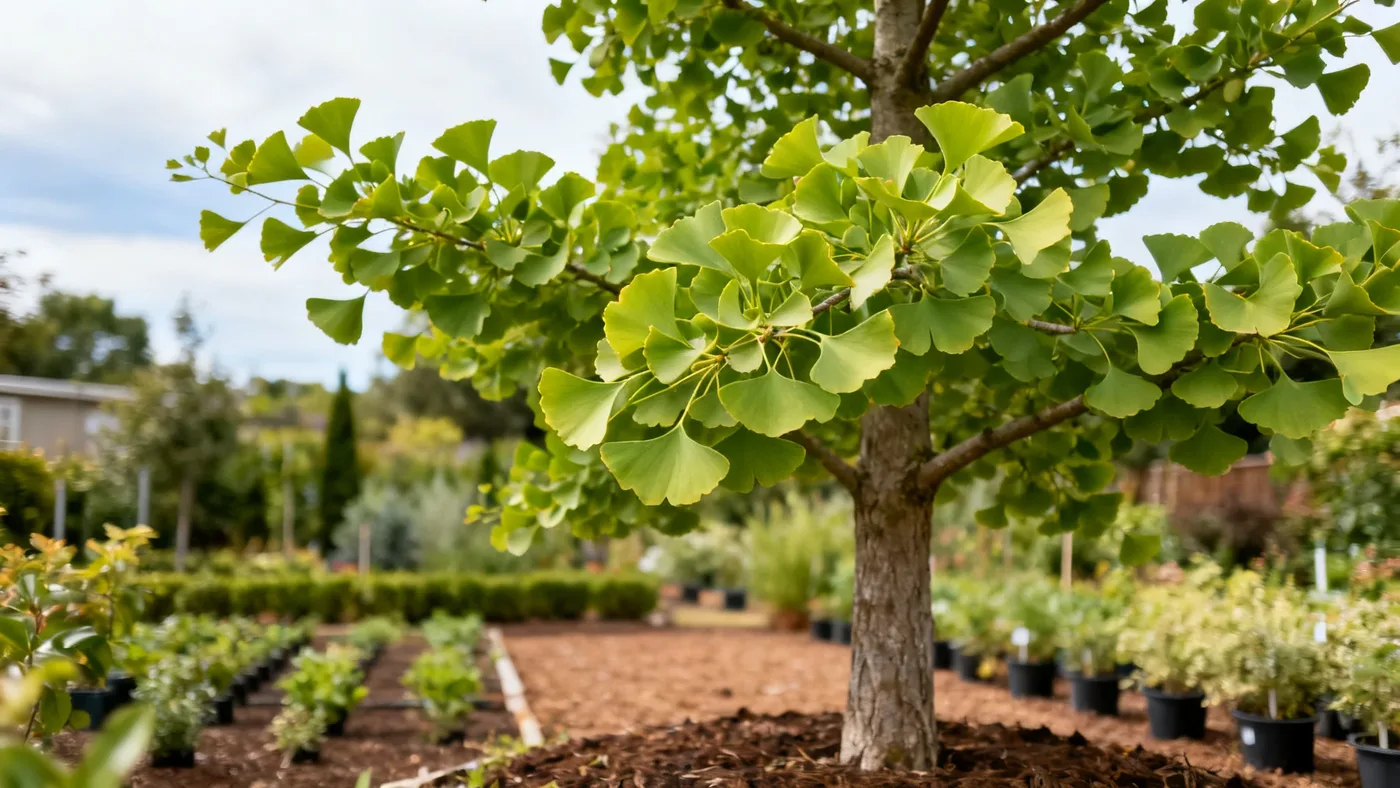
The Ginkgo, or Ginkgo biloba, is a deciduous tree prized for its exotic fan-shaped foliage and brilliant fall color. It belongs to the Ginkgoaceae family and remains largely unchanged since prehistoric times, making it one of the oldest tree species still in existence. Native to China, the species has been cultivated in temple gardens and sacred sites for thousands of years.
Why is it called the "Maidenhair Tree"?
The distinctive fan-shaped, bilobed leaves of the ginkgo closely resemble the delicate fronds of the maidenhair fern (Adiantum species). This resemblance is the only connection between the two plants, which are completely unrelated botanically. The comparison has stuck in horticulture for centuries.
Where does the Ginkgo Maidenhair Tree come from?
Ginkgo biloba is native to China, where some botanists debate whether truly wild populations still exist today. Small relict populations may remain in Zhejiang province. Today, the species is grown worldwide as a beloved ornamental and urban tree.
Growing Conditions: Sun, Water, and Soil
How much sun does a Ginkgo Maidenhair Tree need?
Ginkgo trees require full sun for best growth and fall color. While they can tolerate some light shade, they perform most robustly with at least 6 hours of direct daily sunlight. Place your tree where it receives unobstructed exposure.
What are the best soil conditions for Ginkgo trees?
Ginkgos are highly adaptable, thriving in deep, loamy, well-drained soils but tolerating sandy, clay, and even compacted urban soils. They prefer a soil pH between roughly 5.0 and 8.0, making them suitable for most regions. This resilience is one reason they are popular as street and urban trees.
How often should I water my Ginkgo tree?
Young Ginkgos need regular watering during their first growing season; once established, they tolerate periods of drought and require only average water. In most climates, natural rainfall is sufficient after the first year or two. During extended dry spells, water deeply once or twice weekly.
Which USDA hardiness zones work best for Ginkgo trees?
Ginkgo Maidenhair Trees thrive in USDA zones 3 through 8, with some references extending to zone 9. This wide range makes them adaptable to most North American climates, from the Upper Midwest down through much of the South. Check your local extension service if you are near a zone boundary.
Size, Growth, and Maturity
How tall and wide does a mature Ginkgo tree get?
Standard Ginkgo trees typically reach 25 to 50 feet tall and 25 to 35 feet wide in typical landscape settings. Historic specimens and old trees in native or cultivated sites can grow significantly taller, reaching 80 to 100 feet or more. Columnar and dwarf cultivars stay considerably narrower, making them suitable for smaller spaces.
How fast does a Ginkgo Maidenhair Tree grow?
Ginkgos grow at a slow to moderate rate, typically gaining about 12 inches per year in average conditions. Young trees in ideal growing conditions can grow faster, reaching up to 24 inches annually. Once established, they settle into a steady, measured pace.
When does a Ginkgo tree reach full maturity?
Most Ginkgo trees reach general landscape maturity around 20 years or more of age. Female trees may take 20 to 30 or more years before fruiting begins, which is why all modern cultivars sold for ornamental planting are male. Expect your tree to be a beautiful long-term investment.
Planting Your Ginkgo
When should I plant a Ginkgo Maidenhair Tree?
Plant Ginkgos in spring or fall, avoiding the heat of summer and the cold of deep winter. Spring planting allows roots to establish through summer and fall; fall planting lets roots develop slowly over winter before spring growth begins. Either season works well depending on your local climate and water availability.
How should I space multiple Ginkgo trees?
Space standard Ginkgo forms 25 to 30 feet apart to allow each tree room to develop its full crown. Narrow or columnar cultivars, such as 'Princeton Sentry', require only 8 to 15 feet of spacing. For detailed planting steps, see our guide on how to plant a Ginkgo Maidenhair Tree.
Do Ginkgos transplant well?
Ginkgos have a slow establishment period after transplanting, so they benefit from patient, consistent care during their first one to two seasons. Nursery-grown trees, typically sold in quart, #1, or #3 containers, establish more readily than wild-dug specimens. Water regularly and avoid aggressive pruning during establishment.
Care and Maintenance
Does a Ginkgo tree need pruning?
Ginkgos require minimal pruning and naturally develop a strong, attractive shape. Light pruning in late winter dormancy to remove dead, crossing, or competing branches and establish a central leader while young is all that is needed. Avoid heavy pruning, which can create awkward regrowth.
Do I need to fertilize my Ginkgo?
Fertilizing is generally not needed if your Ginkgo is growing in decent soil. A balanced, slow-release fertilizer applied in early spring can help young or stressed trees establish more quickly. Once settled in, most Ginkgos thrive without supplemental feeding.
Are Ginkgos bothered by pests or diseases?
Ginkgos are essentially disease-free with no serious pest or disease issues typical in most landscapes. Occasional problems with mealybugs and scale insects can occur but are rarely severe enough to require treatment. This resilience makes them ideal for low-maintenance urban and suburban plantings.
Fall Color and Seasonal Appeal
What is the fall color of a Ginkgo tree?
Ginkgo trees produce a brilliant, uniform golden-yellow fall display that is unmistakable and highly sought after by gardeners. The entire canopy turns nearly the same shade of yellow at once, creating a stunning focal point in autumn landscapes. The foliage often drops within a very short window, sometimes just a few days, leaving behind bare branches with lovely furrowed bark.
Does the Ginkgo tree have winter interest?
Beyond its striking fall color, the Ginkgo offers attractive furrowed bark and a strong architectural branch structure that is particularly handsome in winter. The open, spreading canopy creates nice winter silhouettes and allows dappled light to filter through, making it valuable even in the dormant season.
Concerns: Smell, Toxicity, and Common Problems
Why do some Ginkgo trees smell bad in the fall?
The unpleasant odor comes from female trees, which drop fleshy seed coats in fall that decompose with a strong, rancid or vomit-like smell. This is why all modern cultivars sold for ornamental planting are male, guaranteeing you will not have this messy, smelly problem. Always verify you are buying a named male cultivar such as 'Autumn Gold' to avoid unwanted females.
Are Ginkgo trees toxic to pets or people?
The fleshy seed coating and raw seeds contain compounds, including urushiol-like irritants and ginkgotoxin, that can cause skin irritation on contact and illness if ingested in quantity. The foliage is not known to be significantly toxic. Handle fallen seeds carefully and keep pets away from large quantities of seeds.
What other common problems might I encounter?
Messy fruit drop from unwanted female trees is the main problem, though you will avoid this by choosing a male cultivar. Skin irritation from handling fallen seed pulp is another concern, but again, male trees eliminate this issue. Slow establishment after transplanting is normal and resolves with patient watering.
Cultivars and Varieties
Which male Ginkgo cultivars are most popular?
'Autumn Gold' is a broad, spreading form that produces reliably brilliant fall color. 'Princeton Sentry' is a narrow, columnar type ideal for tighter spaces, while 'Fastigiata' offers another columnar option. 'Saratoga' provides a dense, compact form, and 'Jade Butterflies' is a dwarf, shrubby cultivar perfect for small landscapes or container growing.
Landscape Uses and Best Practices
What landscape roles does a Ginkgo tree fill?
Ginkgos excel as shade trees, street trees, and specimen or accent plantings that draw attention with their unique foliage and fall color. They are widely recommended for urban and parking lot plantings because of their excellent salt tolerance and resilience to pollution. They are also ideal for avenue or allee plantings, where rows of trees create dramatic visual corridors.
Can I grow a Ginkgo in a container?
Young trees and dwarf cultivars like 'Jade Butterflies' can be container-grown for a period, and Ginkgos are popular bonsai subjects. However, they are not well-suited to permanent life in a container long-term and eventually require in-ground planting. Use containers only for temporary display or as a way to get plants established before transplanting.
For comprehensive guidance on all aspects of ginkgo care, see our complete care guide.
Quick Reference: Ginkgo Maidenhair Tree at a Glance
| Feature | Details |
|---|---|
| Hardiness Zones | 3-8 (possibly 9) |
| Mature Height | 25-50 ft (standard); 80-100+ ft (old specimens) |
| Mature Width | 25-35 ft (standard); narrower for columnar forms |
| Growth Rate | 12-24 in/year |
| Sun Requirement | Full sun |
| Soil Type | Adaptable; prefers deep, loamy, well-drained |
| Soil pH | 5.0-8.0 |
| Water Needs | Average; drought-tolerant when established |
| Spacing | 25-30 ft (standard); 8-15 ft (columnar) |
| Planting Season | Spring or fall |
| Fall Color | Brilliant golden yellow |
| Pests and Diseases | Essentially disease-free |
| Best Male Cultivars | 'Autumn Gold', 'Princeton Sentry', 'Fastigiata', 'Saratoga' |
| Lifespan | Extremely long-lived (hundreds to 1,000+ years) |