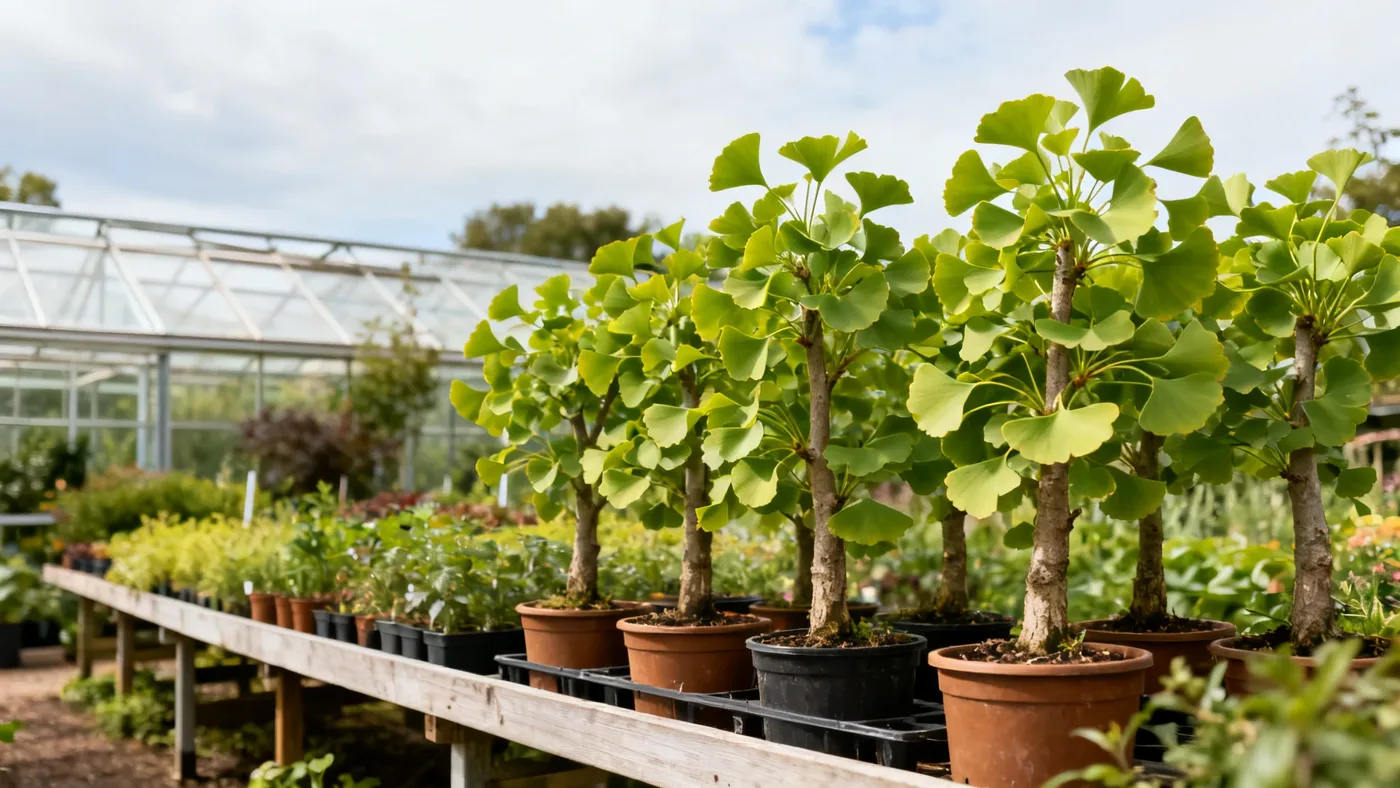
How Big Does a Ginkgo Maidenhair Tree Get? Size and Growth Rate
Planning space for a Ginkgo Maidenhair Tree means knowing what to expect in 10, 20, and 40 years. Whether you're planting a shade tree for your property or choosing a street tree for your community, this guide answers the most common questions about Ginkgo size and growth.
Basic Size Questions
How big do Ginkgo Maidenhair Trees get?
A mature Ginkgo Maidenhair Tree typically reaches 25 to 50 feet tall and 25 to 35 feet wide in typical landscape settings. The height varies based on growing conditions, cultivar selection, and climate zone. Historic or old-growth specimens in native regions and botanical collections can exceed 80 to 100 feet tall, but these are not the norm for home gardeners.
What is the typical mature height of a Ginkgo tree?
Most landscape Ginkgos reach 25 to 50 feet in height when fully mature, which takes 20 or more years to achieve. If you have limited vertical space, dwarf cultivars like 'Jade Butterflies' stay smaller and more shrubby. For urban or street plantings where height control matters, narrow columnar forms like 'Princeton Sentry' or 'Fastigiata' grow tall but occupy much less horizontal space.
How wide do Ginkgo trees spread?
Standard Ginkgo Maidenhair Trees spread 25 to 35 feet at full maturity, creating a broad, vase-like canopy. Columnar cultivars remain significantly narrower, typically 8 to 15 feet wide, making them ideal for tight spaces or avenue plantings. Always check the specific cultivar when planning placement to avoid conflicts with buildings, utilities, or neighboring trees.
Is a Ginkgo tree considered large or small?
Ginkgo Maidenhair Trees are medium to large shade trees, comparable to oak or maple in their mature dimensions. They are not dwarf trees and require adequate space to develop properly. If you are working with limited room, selecting a narrow columnar form is more practical than trying to restrict a standard Ginkgo through pruning.
Growth Rate and Timeline
How fast do Ginkgo trees grow?
Ginkgo Maidenhair Trees grow at a slow to moderate rate, averaging about 12 inches per year. Young trees in ideal conditions with full sun, well-drained soil, and consistent moisture can grow faster, up to 24 inches per year for a period. Growth naturally slows as the tree matures and establishes its permanent form.
What is the growth rate of Ginkgo biloba?
The growth rate of Ginkgo biloba ranges from 12 inches annually in average conditions to as much as 24 inches per year when young trees receive optimal sun, moisture, and soil. After the first 10 years, growth typically becomes more gradual and steady. Site conditions, watering practices, and fertilizer applications all influence whether your tree grows at the slower or faster end of this range.
How long does it take a Ginkgo tree to reach full size?
A Ginkgo tree reaches general landscape maturity in 20 or more years, meaning it has achieved a strong structure and significant size for shade production. At 12 inches of growth per year, reaching 30 feet tall would take approximately 30 years. However, even after 20 years, your Ginkgo will continue to fill out and increase in width and branch density.
Will my Ginkgo grow quickly in the first few years?
Yes, young Ginkgos often grow faster than mature trees, potentially reaching 24 inches per year under ideal conditions. Faster early growth occurs when trees receive full sun, adequate moisture during the growing season, and well-draining soil. Expect this faster rate to taper off after the tree is established, typically 5 to 10 years after planting.
Cultivar Size Differences
Are there smaller Ginkgo varieties I can grow?
Yes, several cultivars offer different sizes than the standard tree. 'Jade Butterflies' is a dwarf, shrubby selection that remains significantly smaller than the species. 'Autumn Gold,' 'Saratoga,' and other named cultivars are still medium to large trees but may have more compact or consistent proportions than seed-grown specimens.
What is 'Jade Butterflies' Ginkgo used for?
'Jade Butterflies' is a dwarf cultivar with a shrubby habit, making it suitable for smaller landscapes, container growing for a period, and gardens where a full-size shade tree is impractical. It is also a popular bonsai subject. However, even dwarf cultivars eventually reach limits in a container and are best viewed as permanent landscape specimens rather than lifelong container plants.
How big are columnar Ginkgo trees like 'Princeton Sentry'?
'Princeton Sentry' and other columnar cultivars like 'Fastigiata' grow tall (25 to 50 feet) but remain narrow, typically 8 to 15 feet wide. These forms are excellent for street trees, narrow lots, or allée plantings where you want significant height and shade without excessive horizontal spread. They still require proper spacing and will not fit in a tiny garden.
Do all Ginkgo cultivars grow at the same rate?
Growth rates are generally consistent across cultivars, though individual trees vary based on site conditions and care. The main difference among cultivars is their shape (spreading versus columnar) rather than speed of growth. Selecting the right form for your space matters more than expecting one cultivar to grow noticeably slower than another.
Spacing and Placement
How far apart should I plant Ginkgo trees?
Space standard Ginkgo Maidenhair Trees 25 to 30 feet apart to allow each mature tree adequate room to develop its full canopy without crowding. Columnar cultivars can be spaced 8 to 15 feet apart since they occupy less horizontal space. For street or avenue plantings, follow your municipality's guidelines, which often account for utility lines and sidewalk widths.
Can I plant a Ginkgo tree near my house?
Plant Ginkgo trees at least 25 to 30 feet from structures to allow adequate root space and prevent branch interference with rooflines, gutters, and siding as the tree matures. Columnar forms can be positioned closer to structures than spreading forms. Always verify local utility easement maps before planting to avoid conflicts with buried lines.
What size area do I need for a mature Ginkgo?
A standard mature Ginkgo needs at least a 25 by 35 foot area to develop without crowding or requiring heavy pruning. This space includes the canopy spread and accounts for root expansion, which extends beyond the dripline. Smaller cultivars and columnar forms need less horizontal space but still require adequate room for their specific form.
Growth Factors and Conditions
What conditions make Ginkgo trees grow faster?
Ginkgo Maidenhair Trees grow fastest when planted in full sun, with medium moisture (not waterlogged), and in deep, loamy, well-drained soil. Young trees that receive consistent water during their establishment phase also grow more vigorously. A balanced, slow-release fertilizer applied in early spring can support young or stressed trees establishing their root systems.
Does soil type affect how fast a Ginkgo grows?
Ginkgo trees are highly adaptable and tolerate sandy, clay, and compacted urban soils, but they prefer deep, loamy, well-drained soil where they grow most vigorously. Trees planted in heavy clay or shallow soil may establish more slowly and reach smaller mature sizes. Improving soil structure with compost at planting time supports better early growth.
Will a Ginkgo tree grow in shade?
Ginkgo Maidenhair Trees require full sun to thrive and will grow slowly or weakly in partial shade. For optimal growth rate and shape, provide at least 6 hours of direct sunlight daily. Shaded trees often become sparse or develop unbalanced form as they stretch toward available light.
How does water affect Ginkgo growth rate?
Consistent moisture during establishment encourages faster early growth, but Ginkgos tolerate drought once established and prefer well-draining soil over constantly wet conditions. Overwatered trees risk root problems that slow overall development. Water newly planted trees regularly the first season, then let natural rainfall sustain mature trees except during prolonged dry periods.
Long-Term Growth and Maturity
Do Ginkgo trees ever stop growing?
Ginkgo Maidenhair Trees slow their growth rate considerably after 20 or more years of establishment but rarely stop growing altogether. They are extremely long-lived, with historic specimens documented at several hundred years old and some in China over 1,000 years old. Your Ginkgo will continue to fill out, deepen its root system, and add girth for decades.
How old is a Ginkgo tree when it reaches full size?
A Ginkgo reaches landscape maturity around 20 or more years after planting, at which point it provides substantial shade and has established its final form. Reaching maximum height and spread can take 30 to 50 years depending on growing conditions. After that point, growth becomes minimal, but the tree continues to strengthen and live for centuries.
Will my Ginkgo tree get damaged by wind when it's large?
Ginkgo Maidenhair Trees have strong branch structure and are wind-resistant when young trees are pruned to establish a central leader in late winter dormancy. Trees with competing stems or poor form are more prone to storm damage. Proper early pruning to remove dead, crossing, or competing branches sets the foundation for a strong, wind-tolerant mature tree.
Can I keep a Ginkgo tree small through pruning?
Minimal pruning is required for Ginkgos, and you cannot significantly restrict their size through routine pruning without risking poor form. Instead, select a cultivar suited to your space. Columnar forms and dwarf selections like 'Jade Butterflies' are better choices than attempting to suppress a standard tree.
Quick Reference: Ginkgo Tree Size and Growth
| Characteristic | Standard Forms | Columnar Cultivars | Dwarf Cultivars |
|---|---|---|---|
| Mature Height | 25-50 ft | 25-50 ft | Significantly smaller, shrubby |
| Mature Width | 25-35 ft | 8-15 ft | Variable, compact |
| Growth Rate | 12-24 in/year (young trees) | 12-24 in/year (young trees) | 12-24 in/year (young trees) |
| Years to Maturity | 20+ years | 20+ years | Variable, faster |
| Spacing | 25-30 ft apart | 8-15 ft apart | Variable per cultivar |
| Best For | Shade trees, specimens | Street trees, avenues, narrow lots | Small landscapes, bonsai |
| Sun Requirement | Full sun | Full sun | Full sun |
| Notable Cultivars | 'Autumn Gold', 'Saratoga' | 'Princeton Sentry', 'Fastigiata' | 'Jade Butterflies' |
Next Steps
Understanding your Ginkgo's potential size helps you make confident planting decisions. Once you've chosen the right location and cultivar, proper establishment care sets the tree up for vigorous, healthy growth. For comprehensive care instructions from soil preparation through maturity, see our complete Ginkgo care guide.