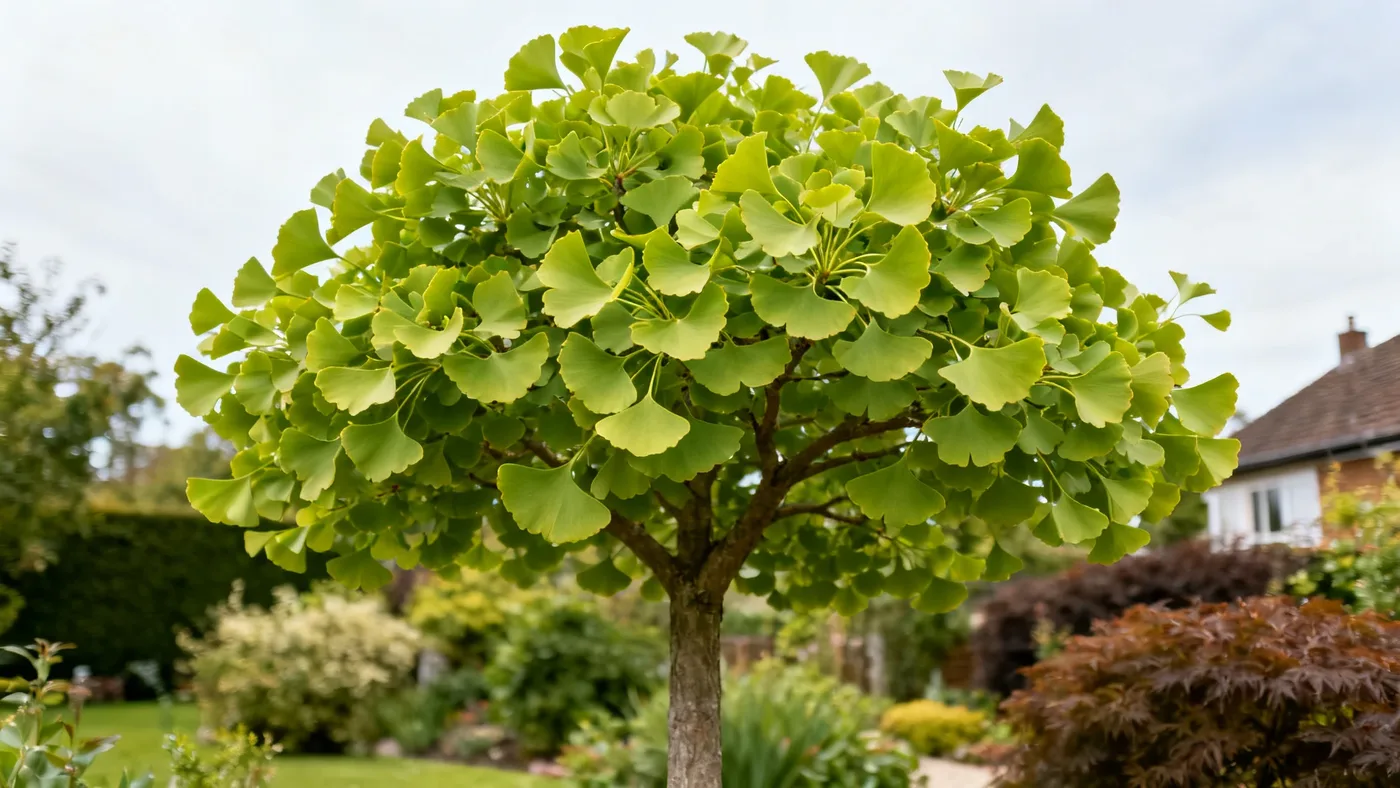
Ginkgo Maidenhair Tree Sun Requirements: Full Sun or Shade?
The Ginkgo Maidenhair Tree thrives in full sun. If you are planning to plant one or wondering whether your current growing site will support healthy growth, understanding these light requirements is essential. A ginkgo in full sun develops dense, vibrant foliage, strong branch structure, and that signature golden fall color. Insufficient light often leads to sparse branching, slower growth, and less reliable annual color display.
This guide walks you through assessing your site, positioning your tree for success, and managing situations where ideal conditions are not available.
What "Full Sun" Means for Ginkgo
Full sun means direct, unobstructed sunlight for at least 6 to 8 hours per day. For a ginkgo, more is better. In regions with hot summers, afternoon shade during peak heat (3 pm to 6 pm) can reduce stress, but this is secondary to overall light availability during the growing season.
Ginkgo is a deciduous tree, meaning it drops its leaves in fall and does not require supplemental winter light. Bare winter sunlight on dormant branches poses no risk and actually supports the tree's hardiness.
The ginkgo's native range in China included full-sun growing conditions in mixed woodlands and open cultivated landscapes. Modern cultivars are equally sun-demanding. Even compact forms like 'Jade Butterflies' and narrow columnar types such as 'Princeton Sentry' perform best with uninterrupted direct light.
Assessing Your Site: Step-by-Step
Before planting, spend time observing your proposed location over a full day and across multiple days if possible. Use these steps to determine whether your site meets ginkgo's light needs.
Step 1: Map sunlight duration
From sunrise to sunset, note when sunlight directly reaches your planting area. Use a simple chart or phone photos taken at hourly intervals. Count only direct sun, not filtered light through tree canopies or buildings. You need 6 to 8 hours minimum. If you can document 8 to 10 hours, the site is ideal.
Step 2: Identify potential shade sources
Mark any structures, trees, or landscape features within 30 to 40 feet of your proposed planting location. Tall trees to the north or east can gradually shade a ginkgo as they grow. Existing ginkgos in USDA zones 3 through 8 are hardy and reliable, but poor light will reduce their growth rate (typically 12 inches per year under good conditions; up to 24 inches per year when young in ideal environments) and compact their form.
Step 3: Check seasonal shade patterns
In spring and fall, shadows are longer. In summer, they shorten. If nearby deciduous trees provide light shade during the hottest months but full sun in early spring and late fall, this is acceptable. Evergreen trees or permanent structures that block sun year-round are problematic.
Step 4: Assess reflected heat and wind
Full-sun sites near south or west-facing walls, pavement, or light-colored buildings intensify heat and can stress young trees. Urban and parking lot plantings benefit from mulch and occasional supplemental water during establishment, even though ginkgo has good drought tolerance once established. These sites are still suitable; they simply require more attentive early care.
Step 5: Verify space for mature size
Ginkgo reaches 25 to 50 feet tall and 25 to 35 feet wide in typical landscape settings. Narrower columnar cultivars (such as 'Fastigiata' and 'Princeton Sentry') are 25 to 35 feet tall but only 8 to 15 feet wide. Ensure no overhead power lines will interfere with growth as the tree matures, and space it far enough from structures so its crown is never shaded by its own canopy reflection.
Choosing the Right Location for Your Ginkgo
Once your site assessment is complete, select a specific planting spot using these guidelines.
Ideal locations
- Open lawns or meadows receiving full day sunlight from east through west
- Street-tree positions where buildings face north and south, providing stable, all-day sun
- Raised berms or elevated ground that avoid shadow from surrounding terrain
- Single specimen plantings where the tree is the sole large woody plant in the area
- Avenue or allee plantings with regular spacing (25 to 30 feet between standard forms, 8 to 15 feet for columnar types) across open ground
Marginal locations
- Urban courtyards with light shade from surrounding buildings during afternoon hours (still viable if 6+ hours direct sun is available)
- Edges of partially wooded areas, with the tree positioned to receive morning and midday sun
- Parking lots where reflected heat from pavement is high but light is ample
Unsuitable locations
- Dense shade under tall evergreens or thick deciduous canopies
- North-facing slopes or base-of-hill positions receiving morning sun only
- Areas in permanent rain shadows or blocked from sky view by walls and structures
- Interiors of thick hedgerows or shrub masses
Planting: Timing and Technique
Plant ginkgo in spring or fall. Full-sun locations warm up faster in spring, which helps young roots establish. Fall planting allows roots to develop in cooler soil without competing for the tree's energy during new leaf growth.
Prepare a planting hole 2 to 3 times wider than the root ball and just as deep. Loosen compacted soil in the planting area. Ginkgo tolerates sandy, clay, and even compacted urban soils, but establishment is faster in deep, loamy, well-drained earth with a pH between roughly 5.0 and 8.0. Backfill with native soil; avoid amending with excessive compost or bark, which can hold water around young roots.
In full-sun positions with reflective heat (parking lots, south-facing walls), apply 2 to 3 inches of mulch around the base, keeping it 4 to 6 inches away from the trunk. This moderates soil temperature and retains moisture during the first 2 to 3 growing seasons while roots expand.
Managing Suboptimal Light
Not every ginkgo planting site offers perfect full sun. If you are working with partial shade or marginal light conditions, these strategies help minimize the impact.
Prune competing plants gradually
If nearby trees cast increasing shade, remove or raise their lower canopies over several years to allow more light to reach your ginkgo. Sudden removal of shade can shock the ginkgo; gradual opening of the canopy is better.
Choose a narrower cultivar
In confined spaces or sites with afternoon shade, columnar forms such as 'Princeton Sentry' or 'Fastigiata' make efficient use of available light because their upright habit concentrates foliage vertically rather than spreading it horizontally into shadowed areas.
Expect slower growth and narrower form
A ginkgo in 4 to 6 hours of direct sun will grow reliably but more slowly than one in full sun. Growth rates drop to roughly 6 to 8 inches per year instead of the typical 12 to 24 inches. The tree will eventually reach reasonable size and develop the ginkgo's characteristic branching and fall color, but maturity takes longer.
Supplement with reflective surfaces
Light-colored hardscape, gravel, or mulch adjacent to a marginal-light ginkgo reflects additional sunlight upward and can improve light availability by 15 to 20 percent without requiring major changes to the landscape.
Common Mistakes to Avoid
Planting under existing canopy for eventual height. Ginkgo does not adapt to shade by growing taller to reach light. It develops a weaker central leader and sparse side branching. Plan the site based on current conditions, not hoped-for future canopy removal.
Accepting morning-sun-only sites. A ginkgo that receives 4 to 6 hours of morning sun but is shaded by afternoon structures will struggle. The afternoon light loss is often more limiting than equivalent morning loss because summer sun is stronger in afternoon hours.
Underestimating shade from newly planted trees. Trees you plant nearby as understory or companion plantings can shade your ginkgo within 5 to 10 years. Space ginkgo as a standalone specimen or ensure companions are deciduous shrubs that will shed their leaves in winter.
Confusing tolerates urban conditions with shade tolerant. Ginkgo's famous hardiness in cities refers to its resilience against pollution, salt, and soil compaction, not its ability to thrive in partial shade. Full sun is still required.
Ignoring reflected heat stress in full sun. Intense afternoon sun on pavement can overheat young ginkgo roots. Mulch and occasional irrigation during the first two years prevent heat stress, even though mature trees are drought-tolerant.
Expected Results
A ginkgo planted in full sun and appropriate USDA zone (3 through 8, with some cultivars extending to zone 9) will produce dense, healthy growth within 2 to 3 years. Foliage will be bright to medium green during the growing season and transition to brilliant, uniform golden yellow by fall. Leaves typically drop within a very short window of a few days, creating a striking seasonal event.
Branch structure will become increasingly architectural and ornamental as the tree matures, particularly visible in winter dormancy. The furrowed bark adds winter interest. Mature height of 25 to 50 feet is reached over 20+ years.
In partial shade (4 to 6 hours of direct sun), growth is slower and fall color may be less intense, but the tree will remain healthy and develop characteristic ginkgo form over a longer timeline.
Ginkgo Sun Requirements: Quick Reference
| Factor | Requirement | Notes |
|---|---|---|
| Direct sunlight | 6 to 8 hours minimum per day | More is better; 8 to 10 hours ideal |
| Summer shade | Acceptable if overall sun minimum is met | Afternoon shade in hot climates reduces stress |
| Winter light | Not required for dormant wood | Bare branches in winter sun are normal and beneficial |
| Shade tolerance | Low; not shade-adapted | Full-sun tree; decline in partial shade |
| Canopy spread clearance | 25 to 30 feet (standard forms); 8 to 15 feet (columnar) | Measure mature width, not current nursery size |
| Reflected heat | Tolerable with mulch during establishment | Apply 2 to 3 inches of mulch first 2 to 3 years |
| Site assessment timing | Observe over multiple days across seasons | Spring/fall shadows differ from summer; plan accordingly |
| Planting season | Spring or fall | Spring preferable in full-sun positions for faster root establishment |
| Expected growth rate (full sun) | 12 to 24 inches per year while young | Slows to 12 inches per year as tree matures |
| Expected growth rate (partial shade) | 6 to 8 inches per year | Tree remains healthy but establishes over longer period |
| Hardiness zones | USDA 3 to 8 (some cultivars extend to zone 9) | Full sun requirement holds across all zones |
| Companion reference | See Ginkgo Maidenhair Tree Care Guide | Comprehensive planting, pruning, and establishment steps |