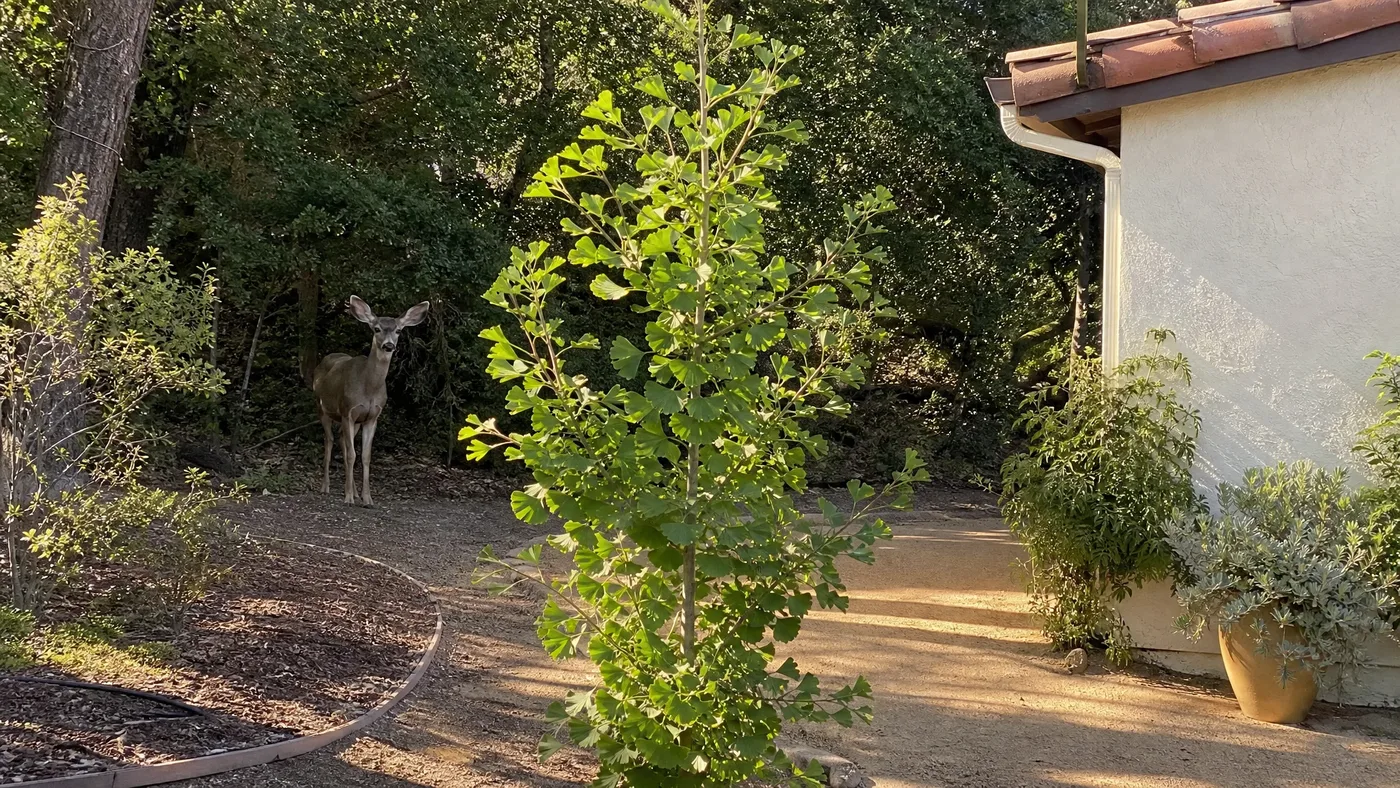
Is the Ginkgo Tree Deer Resistant? Here's the Answer
The landscape budget had a line that read "deer fencing, one young shade tree," and the quote beside it was larger than the line for the tree itself. One homeowner we talked with came close to signing it before asking whether the tree needed fencing at all.
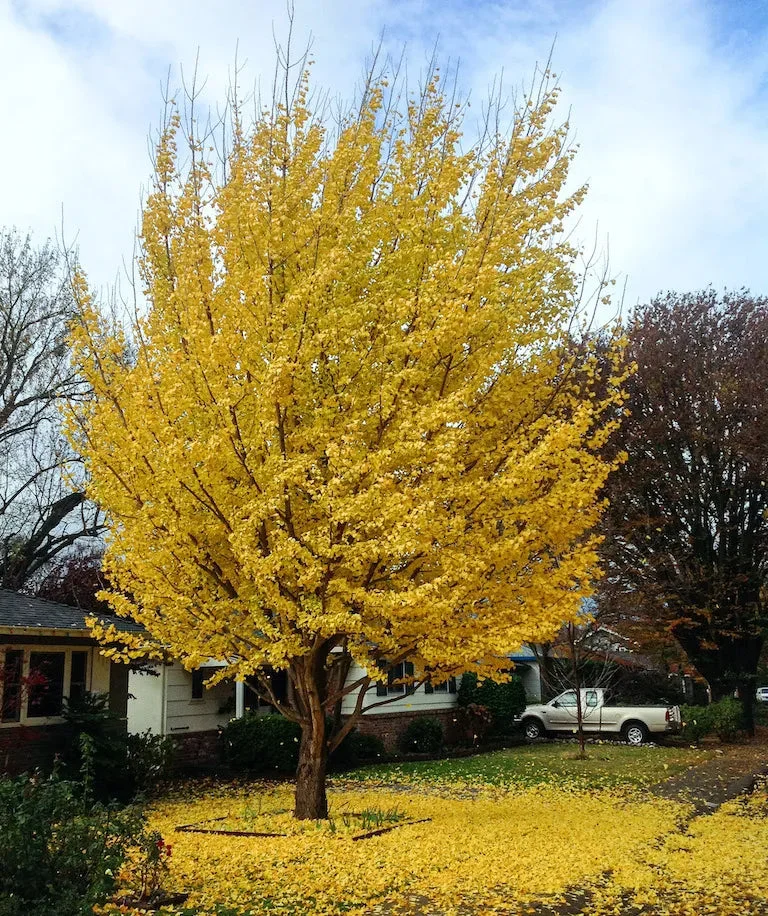
That is a fair question to ask about Ginkgo. The tree is native to south-central and southeast China, and its lineage has lived alongside browsing animals and insects for hundreds of millions of years. A record that long should change what you spend on protection, though maybe not in the way a plant tag suggests.
We'll walk you through the beliefs people hold about deer, insects, fencing, disease and age, test each one against the sources, then add up what the tree's resistance is worth in years and dollars.
Deer Will Never Touch a Ginkgo Maidenhair Tree
This belief sits behind most of the searches we see, and it is only half right. The tree is commonly tagged deer resistant, which is the strongest statement any of our sources makes. None of them says deer proof. We treat that gap as the whole story: "rarely browsed" is a fair description of Ginkgo, and "never browsed" is a promise nobody can back.
What "Resistant" Means on a Plant List
Resistance ranks how likely deer are to choose a plant when other food is around. It says nothing about one hungry animal on one hard winter night. A herd that has stripped everything else nearby will sample plants it normally passes, and a young tree is the easiest test. Ginkgo leaves are fan-shaped, 2 to 3 inches long and grouped in clusters of three to five, so a few bites can take a visible share of a small tree's canopy.
Reading Your Own Deer Pressure
Your street is better evidence than any list. Look at what the deer have already eaten or ignored, and ask your local extension service how they rate Ginkgo in your county, because deer numbers vary a great deal from one area to the next.
If the hostas and yews next door are chewed to stubs, plan to guard a young Ginkgo for a few seasons. If the neighbors' ornamentals are untouched, you can relax further. Common advice treats "deer resistant" as a green light to skip planning, and we would rather you treat it as a low-risk rating that still earns a quick check.
Bugs Skip Ginkgo Because Its Chemistry Is Ancient
People often assume that insects ignore Ginkgo entirely. The tree is known for its resistance to most pests and insects, and the word that matters there is "most." The reason is chemical. Ginkgo foliage carries biflavonoid and ginkgolide compounds, defenses the lineage has held for over 200 million years, and chewing insects have had a very long time to learn that these leaves are poor eating.
The seed has its own defense. Many animals avoid the fallen seeds, likely because the fleshy covering contains butyric acid. That is the same rancid smell you meet under a female tree, which we cover in our guide to Ginkgo seeds, smell and cleanup. The trait that protects the seed is the one that makes the neighbors complain.
For a planner, the useful fact is what is missing. Ginkgo is generally pest-free, so there is no standing line in the budget for a spray program or a tree-care contract. An occasional chewed leaf can still happen. If you see damage that looks serious, take a photo to your local extension office before you buy any treatment.
Fencing a Young Ginkgo Maidenhair Tree Is Wasted Money
One of the most common questions we get is whether a newly planted Ginkgo needs a fence. Our answer is that a permanent perimeter fence is wasted money, but a few seasons of cheap guarding are not. The tree is usually slow-growing, especially in its early years. A slow grower stays within a deer's reach for longer than a fast one.
The cost of being wrong is lopsided. A wire cage and a trunk wrap cost little and come off in a few years. A leader lost in a bad winter sets back a tree that was never going to catch up quickly. A fence sized for the whole yard costs far more and protects against a risk our sources rate as low.
A Cheap Guarding Plan
This is the order we would plan it in:
- Check the pressure first. Walk the property in late fall, look for browsed shrubs and tracks, and ask your extension service what deer in your area are eating.
- Cage the tree, not the yard. A ring of wire mesh, staked and set out from the trunk, keeps deer from reaching the top shoot.
- Wrap the trunk for winter. A wrap protects thin bark from gnawing and antler rubbing, which are separate risks from leaf browsing.
- Re-check every fall. Loosen ties as the trunk thickens so nothing binds the bark.
- Retire the guard on purpose. Once the lowest branches are above a deer's reach and nothing has been touched, take it down.
Put the guard on the same planning sheet as the watering schedule, with a date to review it. A temporary measure with an end date is a small cost. One with no end date turns into a permanent habit.
Ginkgo Maidenhair Tree Never Gets Sick
The tree is free of serious pests and diseases. "Serious" is the word to hold onto, because minor trouble does exist. The only listed problem is that the plant may cause contact dermatitis, and no disease is named. In our experience the real problems are cultural, caused by water and handling more than by pathogens.
This table sets out the minor issues we see and what we do about each one.
| Problem | What you see | What we do |
|---|---|---|
| Leaf scorch | Brown, crisped leaf edges in hot, dry spells | Soak deeply during dry weather, mainly in the first years |
| Poorly drained soil | Weak, slow growth | Plant where water drains, since the tree prefers moist, well-drained soil |
| Skin contact | Mild irritation after handling seed pulp | Wear gloves for cleanup |
| Fruit odor | A strong, unpleasant smell under female trees | Plan for it or choose a male tree |
Scorch confuses people because the tree's drought tolerance is high. A mature tree with a wide root system handles dry weather well, but a first-summer tree has not spread its roots yet. We often see scorch calls from first-year trees, and the fix is nearly always a slow, deep soak. Our seasonal watering guide lays out the schedule, and our list of common Ginkgo problems covers the rest.
Anything That Old Must Be Indestructible
Ginkgo is often called a living fossil. It has existed largely unchanged for 200-250 million years and is the only remaining species of an entire phylum, the Ginkgophyta. It is easy to hear that and conclude that a tree this old cannot be killed. The conclusion does not follow, and a yard planting can fail for ordinary reasons.
What the Fossil Record Does Promise
A lineage that old has proven tolerance to pests and a wide range of conditions. The species tolerates pollution and pests, which is why it is often planted in cities. It also tolerates most soils, including compacted and alkaline ones. For a site where other shade trees struggle, that record is a real advantage. For more of that story, see our Ginkgo history guide.
What It Does Not Promise
Survival of a species across geologic time says nothing about one tree planted this fall. A single tree can still sit in a spot that stays wet, go without water through its first summer, or be planted outside the zones it can handle. The record also does not speed up a tree that grows slowly in its early years.
So treat the fossil record as a reason to expect low maintenance, not a reason to skip site work. Plant it in good drainage, water it through the first seasons, and guard it while it is small. The age is a strong argument for the tree, but the planting still has to be done properly.
What Ginkgo Maidenhair Tree Resistance Is Worth Over Decades
Resistance pays off in what you never buy. The tree grows to 50 to 80 feet tall and 30 to 40 feet wide and is hardy in zones 3a through 9b. Narrower zone ranges exist, so check your own zone before you plant. At that size, spraying or treating a tree becomes a recurring contractor job, and Ginkgo does not generate one.
The First Three Years
This is the only stretch with real spending: a cage, a trunk wrap, regular watering and a review each fall. Your cost is modest and most of it is time. The guard comes off once the tree is out of reach.
The Long Middle
From the fourth year on, the line items thin out. There is no spray schedule and no fencing, and little chance of replacing a tree lost to disease. What you spend instead is the ordinary upkeep any shade tree needs, such as pruning when it makes sense. Our care guide covers that routine.
Where a Small Budget Still Belongs
Put the money into the planting, not the protection. Dig a proper hole, set the tree at the right depth and check the drainage, using our guide to planting a Ginkgo the right way. A well-sited tree needs little guarding, and a poorly sited one needs far more than a cage can give.
A Ginkgo Maidenhair Tree Pays Back Slowly and Steadily
Deer rate the tree as resistant, not proof, so guard it lightly while it is young. Insects mostly pass it by because of its ancient chemistry, though not completely. Its health problems are minor, and almost all of them trace back to water and handling. Its age is a good sign, but it does not replace a well-chosen site.
The tally is plain: modest protection for the first few seasons, then close to nothing for decades.
Ginkgo Maidenhair Tree
Nursery-grown Ginkgo Maidenhair Tree in sizes from 1 Gallon Container 1-2' Feet Tall, shipped to your door.
From $80.55
Shop Now →Our growers raise every Ginkgo in full sun on well-drained ground, watching each tree through the seasons for scorch, drought stress and winter browsing. Each one is a top-quality tree we grew from the start, so when you are ready, you can pick out a Ginkgo for your own yard in our shop.