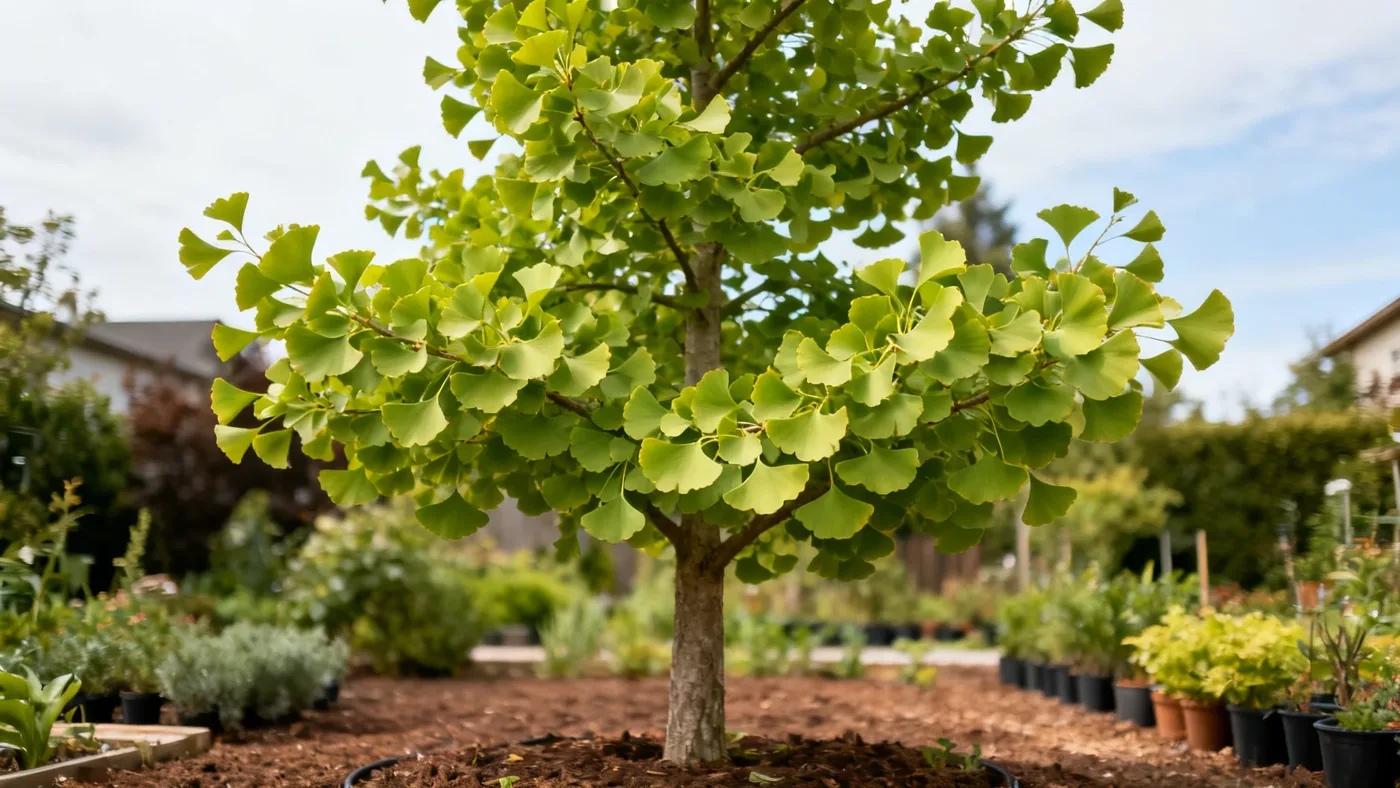
Best Soil for a Ginkgo Maidenhair Tree: pH, Drainage and More
Ginkgo trees are famous for toughness, but their survival in poor conditions doesn't mean they thrive in them. Getting the soil right at planting time sets your tree up for stronger growth, faster establishment, and decades of reliable performance. The good news: Ginkgos are remarkably forgiving. They tolerate sandy soil, clay, and even urban compacted earth. Yet they have clear preferences, and understanding those preferences is the difference between a struggling tree and a vigorous one.
This guide walks you through assessing your existing soil, amending it if needed, and preparing a planting hole that gives your Ginkgo the best start. Whether you're planting in a typical backyard or challenging urban site, these steps apply.
Understanding What Ginkgo Soil Needs
Ginkgo biloba prefers deep, loamy, well-drained soil. That's the ideal. Loam is a balanced mix of sand, silt, and clay, typically dark and crumbly, with good structure. Deep means the tree's roots can push down without hitting hardpan or rock, usually at least 24 inches before you hit compacted layers. Well-drained means water moves through the soil after rain or watering rather than pooling or sitting.
The soil pH range for Ginkgo is roughly 5.0 to 8.0, which covers acidic to neutral to slightly alkaline soils. This adaptability is part of what makes the Ginkgo such a reliable street tree and landscape plant across climate zones 3 through 8. It means you rarely need to adjust pH; most residential and urban soils fall within this range.
Drainage is the real priority. A Ginkgo can handle sandy soil that drains fast, and it can tolerate clay that holds more moisture, but poor drainage leading to waterlogged roots is the main stress point. The tree tolerates drought once established, so it's far more forgiving of dry soil than wet soil.
Materials and Amendments You May Need
- A soil test kit or sample sent to your local extension service (optional but helpful)
- Compost or aged composted bark, 2 to 4 cubic feet per planting hole
- Perlite or coarse sand, if your soil is heavy clay (1 to 2 cubic feet)
- A balanced, slow-release fertilizer (10-10-10 or similar), about 1 cup
- Mulch (wood chips or shredded bark), 2 to 3 inches deep
- A shovel, soil knife, and bucket for mixing
- Water source for soaking the planting area
Step-by-Step Soil Preparation and Planting
Step 1: Test or Observe Your Soil
Before amending, understand what you're working with. Dig a hole in your planting area about 12 inches deep and 18 inches across. Fill it with water and let it drain. If water drains within 24 hours, your drainage is acceptable. If it pools or takes days to drain, you have a drainage problem that needs addressing.
Grab a handful of moist soil from the side of your hole. Squeeze it. Sandy soil crumbles apart quickly. Clay soil forms a tight ball that holds its shape. Loam breaks apart after gentle pressure. If you want precise pH and nutrient data, send a sample to your county extension service. Most offer inexpensive testing that takes a week or two.
Step 2: Calculate Planting Hole Size
Ginkgos reach 25 to 50 feet tall in typical landscape settings, with spreads of 25 to 35 feet for standard cultivars. Even when young, you need a properly sized hole. Dig a planting hole at least 18 to 24 inches deeper than the root ball and 24 to 30 inches wider. For a container-grown Ginkgo sold in a #1 or #3 pot, this usually means a hole 24 to 36 inches wide and 18 to 30 inches deep.
The wider hole gives roots room to establish into native soil without being forced into a sharp boundary between amended soil and clay or compacted earth.
Step 3: Loosen the Soil at the Hole Bottom
Use a shovel or broadfork to break up compacted soil at the bottom of the hole. You're not digging deeper; you're just fracturing the layer underneath so roots can push through without resistance. Loosen the sides of the hole too. A sharp spade pressed into the wall of the hole, twisted back, then removed, works well for this. You want the walls rough, not smooth.
Step 4: Prepare Your Soil Amendment Mix
For loamy or average garden soil, a 30 to 50 percent amendment by volume is sufficient. For sandy soil that drains too fast, use closer to 40 to 50 percent compost to improve moisture retention. For clay soil, use 25 to 40 percent compost, and add 10 to 15 percent perlite or coarse sand to improve drainage.
Mix your amendments in a pile on a tarp or directly in a wheelbarrow. Combine the excavated native soil with aged compost or composted bark. If adding perlite or sand for clay, mix it in thoroughly.
Step 5: Fill the Hole and Settle the Soil
Add the amended soil mix back into the hole in layers, roughly 6 inches at a time. Firm each layer gently with your foot. Don't stomp; you're just settling the soil, not compacting it to hardpan. When you've filled the hole to match the depth of the tree's root ball, stop and water thoroughly. Let the water soak in for an hour or two. This settles the soil and reveals any obvious voids.
Add more soil mix if needed to bring the level to the base of the root ball. The top of the root ball should sit at or just slightly above ground level, not buried.
Step 6: Position the Tree and Backfill
Carefully remove the Ginkgo from its container and loosen the root ball by hand, especially if roots are circling the outside. Set the tree in the center of the hole and adjust until it's upright and at the right depth. Step back and check alignment from a few angles.
Backfill around the root ball with your amended soil mix, working it gently into gaps around the sides. Again, firm each layer lightly. Water as you fill to eliminate air pockets.
Step 7: Apply Mulch and Water
Spread 2 to 3 inches of mulch (wood chips or shredded bark) evenly around the base, starting a few inches away from the trunk. Mulch moderates soil temperature, retains moisture, and suppresses weeds. Water the entire area deeply. The soil should be moist 8 to 12 inches down.
Step 8: Optional Fertilization for Young Trees
If your soil is poor or the tree looks stressed after planting, apply a balanced, slow-release fertilizer (10-10-10 or similar) in early spring of the first year. Use about 1 cup per young tree, spread over the drip zone and watered in. Ginkgos generally don't need ongoing fertilization in decent soil, but a light hand during establishment helps.
Tips and Common Mistakes to Avoid
Do not bury the trunk. Ginkgos are prone to root rot if soil piles against the stem. Keep mulch and soil 6 inches away from the trunk base.
Do not plant in standing water. If your hole drains in more than 48 hours, drainage is too poor. Either dig a deeper, wider hole and amend more heavily, or choose a different planting site.
Do not skip the amendment step in clay soil. Ginkgos tolerate clay, but they tolerate it best when clay is loosened and mixed with organic matter. Dense, unbroken clay forces roots to stay shallow and spreads early drought stress.
Do not add fertilizer at planting time if your soil is already fertile. Excess nitrogen pushes soft, weak growth on young trees and uses energy that should go into root establishment.
Do not assume a Ginkgo planted in sandy soil needs constant water. The tree is drought-tolerant once established. Sandy soil means you'll water earlier in a dry spell, but the tree is unlikely to suffer if you miss one week of rain. Overwatering weak, newly planted trees in sandy soil causes other problems.
Expected Results and Timeline
A Ginkgo planted in well-prepared soil grows at a slow to moderate rate, roughly 12 inches per year under average conditions, or up to 24 inches per year in ideal conditions while young. In poor soil or under stress, growth slows to under 12 inches annually.
The first year after planting is establishment. The tree focuses energy on roots rather than visible above-ground growth. By year two and three, you should see stronger branching and fuller foliage if soil and water conditions are good.
Deep, well-drained, loamy soil with a pH between 5.0 and 8.0 gives your Ginkgo every structural advantage. Once established, it will tolerate periods of drought and poor conditions. That resilience begins with planting right.
Quick Reference: Ginkgo Soil Checklist
| Soil Factor | Target Range | Action If Below Standard |
|---|---|---|
| Drainage time | Drains within 24 hours | Add perlite, sand, or compost; widen hole; consider raised bed or different site |
| Soil depth | At least 24 inches of loose soil | Break up compacted layers; deepen hole; amend heavily |
| pH | 5.0 to 8.0 | Most soils fit this range; test to confirm; adjust only if outside range |
| Soil type | Loamy (balanced sand, silt, clay) | Add 30-50% compost to sandy or clay soil |
| Organic matter | 3-5% by weight | Mix in compost or aged bark at planting |
| Mulch depth | 2 to 3 inches | Apply after planting; keep 6 inches from trunk |
For more on Ginkgo care after the first season, see our Ginkgo Maidenhair Tree care guide.