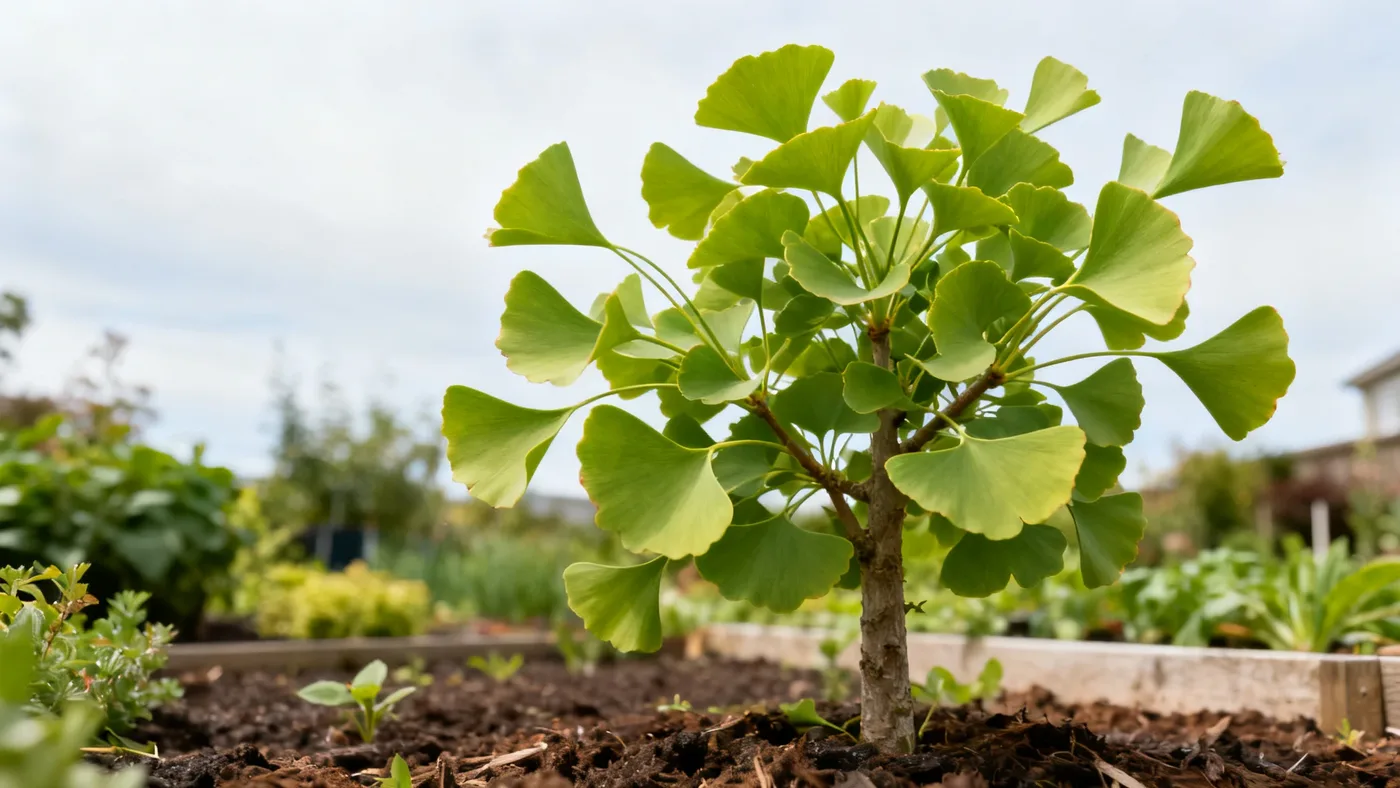
Fertilizing a Ginkgo Maidenhair Tree: What It Needs and When
Ginkgo biloba is famously tough. It tolerates compacted urban soils, salt exposure, and pollution that would stress most trees. This hardiness means many ginkgos thrive without any fertilizer once established. That said, a young ginkgo or a stressed tree can benefit from the right nutrients at the right time. Understanding when your ginkgo actually needs feeding, and how to do it correctly, helps you avoid wasting money on unnecessary applications while supporting healthy establishment and growth.
Does Ginkgo Really Need Fertilizer?
The short answer: probably not, if your soil is decent. Ginkgo trees grow slowly to moderately, at roughly 12 inches per year in typical conditions and faster (up to 24 inches per year) when young in ideal conditions. This measured growth rate means the tree is not a heavy feeder. A mature ginkgo in average soil requires no supplemental fertilizer to stay healthy.
Your ginkgo is a candidate for fertilizer only in these specific situations:
- A newly transplanted tree still settling into its location during its first 1-2 growing seasons
- A tree showing visible signs of stress: pale or yellowing foliage, stunted growth, or leaf scorch after establishment
- Soil that is visibly compacted, sandy, or depleted and cannot be improved by adding compost or mulch
- A tree growing in a container or a very restricted planting space
If your ginkgo has glossy green foliage, normal annual growth, and no signs of nutrient deficiency, skip the fertilizer. Overfeeding can actually harm the tree by promoting soft new growth that is more prone to pest damage and winter injury.
Understanding Your Ginkgo's Soil Needs
Ginkgo biloba is remarkably adaptable to soil type and pH. The tree tolerates sandy soils, clay soils, and even compacted urban soils. It grows across USDA zones 3 through 8, meaning it performs in a wide range of climates and soil compositions. The only real preference is for deep, loamy, well-drained soil, but this is a preference, not a requirement.
Soil pH is not a limiting factor. Your ginkgo will grow in acidic soil (pH 5.0), neutral soil, or alkaline soil (pH 8.0) without issue. This means you do not need to test or amend soil pH before planting or fertilizing.
The most valuable thing you can do for a ginkgo in marginal soil is add 2 to 3 inches of mulch around the base (keeping it a few inches away from the trunk). Mulch moderates soil temperature, retains moisture, and gradually breaks down to improve soil structure. This is often more effective than fertilizer and costs less.
Best Fertilizer for Ginkgo Maidenhair Tree
If your tree needs fertilizer, choose a balanced, slow-release formula. A ratio like 10-10-10 or 5-10-5 works well. Slow-release fertilizers release nutrients gradually over weeks or months, reducing the risk of burning roots or causing excessive soft growth. Avoid high-nitrogen formulas (such as 20-10-10), which promote leafy growth at the expense of branch strength and cold hardiness.
You have several application options:
- Granular slow-release fertilizer: Scatter it around the base of the tree according to package instructions, then water thoroughly. These are economical and straightforward for most homeowners.
- Liquid fertilizer: Dilute and apply to the soil around the tree. Liquid products work quickly but require more frequent application if you want sustained nutrition.
- Tree spikes or pellets: Drive these into the soil near the drip line. They release nutrients slowly as soil moisture dissolves them. Convenient but typically more expensive per application.
Organic options such as compost tea, fish emulsion, or seaweed extract are gentler and align with the ginkgo's low-input nature. These provide nutrients plus beneficial microorganisms and do not risk over-application.
Step-by-Step Fertilizing Instructions
Follow these steps to fertilize your ginkgo correctly:
- Assess soil moisture before applying: Water your tree thoroughly 1 to 2 days before fertilizing. Fertilizer should never contact dry soil around the root zone, as this can concentrate salts and damage roots. The soil should be moist but not waterlogged.
- Measure the application area: Determine the tree's drip line, which is roughly where the outer branches end. Spread fertilizer in a circle from about 1 foot away from the trunk out to the drip line. Do not pile fertilizer against the trunk, as this can burn bark and lead to disease.
- Apply the correct amount: Follow the product label instructions, which base dosage on tree size or trunk diameter. If the label lacks clarity, a young tree (under 5 years old) typically needs 1 pound of slow-release fertilizer per inch of trunk diameter; an established tree needs less frequent application.
- Water immediately after application: Soak the area thoroughly so the fertilizer dissolves and moves into the root zone. Watering also prevents any fertilizer from sitting on the surface and potentially burning foliage if heavy rain follows.
- Apply mulch if absent: If your tree has bare soil around its base, add 2 to 3 inches of wood chip mulch after fertilizing. This suppresses weeds, retains soil moisture, and regulates temperature, all of which support nutrient uptake and root health.
When to Fertilize: A Seasonal Schedule
Timing matters when it comes to how to fertilize ginkgo trees. Apply fertilizer only during the active growing season, never in fall or winter.
Early spring (March to April): This is the best time to fertilize a ginkgo. As the tree breaks dormancy and new leaves emerge, it has maximum demand for nutrients. A single application in early spring is often all an established tree needs for the entire year.
Late spring or early summer (May to June): A second application can help a young tree (first 2 years after transplanting) or a heavily stressed tree establish faster. Most established trees do not need a second feeding.
Never fertilize in fall or winter: Late-season feeding stimulates tender new growth that will be killed by frost, wasting nutrients and weakening the tree's winter hardiness.
Space applications 6 to 8 weeks apart if you apply fertilizer more than once per year. The slow-release formula will continue to feed the tree between applications, so additional doses are rarely necessary.
Common Mistakes and How to Avoid Them
Over-fertilizing: More is not better. Excess nitrogen in particular promotes succulent new growth that is attractive to insects and prone to freeze damage. Stick to the label rate, and remember that one application per year is sufficient for most ginkgos.
Fertilizing established trees unnecessarily: A healthy 10-year-old ginkgo in decent soil does not need fertilizer at all. Only fertilize if the tree shows clear signs of stress or poor growth.
Applying fertilizer to dry soil: Always water your tree first. Applying granular fertilizer to dry earth and then watering concentrates salts around the roots, risking damage instead of support.
Neglecting mulch: Many gardeners assume fertilizer is the solution when the real issue is exposed soil that dries too quickly or gets too hot. Mulch addresses both problems and costs less than repeated fertilizer applications.
Using high-nitrogen formulas: These feed leafy growth at the expense of branch strength and can delay the tree's adjustment to its new location. Stick to balanced fertilizer (10-10-10 or 5-10-5).
Expected Results and Timeline
If your ginkgo truly needed fertilizer, you may notice improved vigor within 4 to 6 weeks: slightly brighter foliage, more robust new growth, and longer shoots compared to the previous year. However, ginkgos grow slowly by design. Do not expect dramatic changes. A young tree may add 12 to 24 inches of height per year depending on conditions; an older tree even less. Consistent, moderate growth year after year is what to expect and want.
Quick Reference: Ginkgo Fertilizing Checklist
| Task | When | Notes |
|---|---|---|
| Check if tree needs fertilizer | Any time | Only if newly planted, stressed, or in poor soil |
| Water tree before fertilizing | 1-2 days before application | Soil must be moist, never dry |
| Apply balanced slow-release fertilizer | Early spring (March-April) | Use 10-10-10 or 5-10-5 formula; follow label rate |
| Water thoroughly after fertilizing | Immediately after application | Ensures fertilizer reaches the root zone |
| Optional: Second application | Late spring or early summer (May-June) | Only for young or stressed trees; 6-8 weeks after first |
| Add or refresh mulch | Spring or after fertilizing | 2-3 inches of wood chips, away from trunk |
| Stop all fertilizing | After July | Never fertilize in fall or winter |
For more information on ginkgo care beyond fertilizing, see our complete Ginkgo Maidenhair Tree care guide.